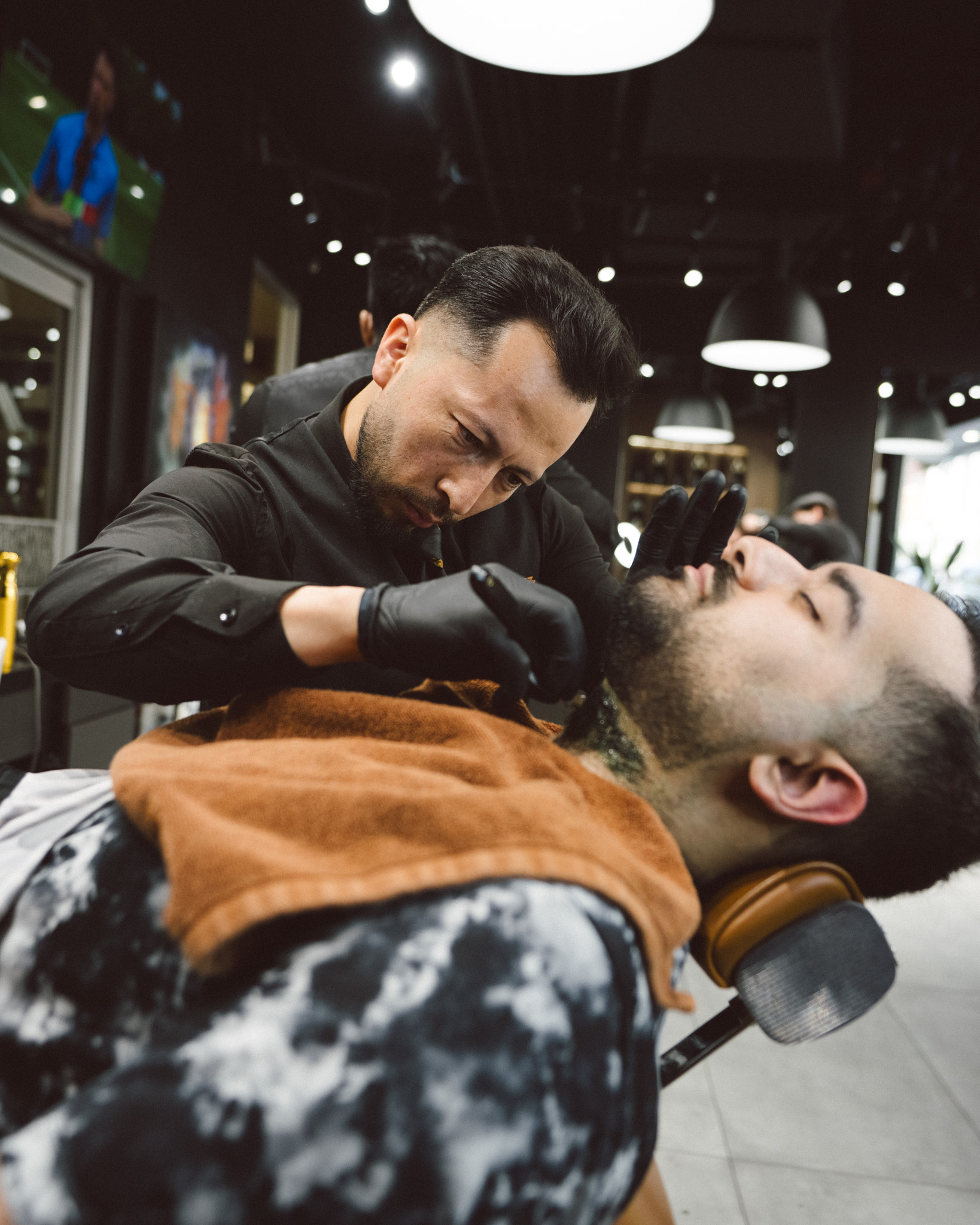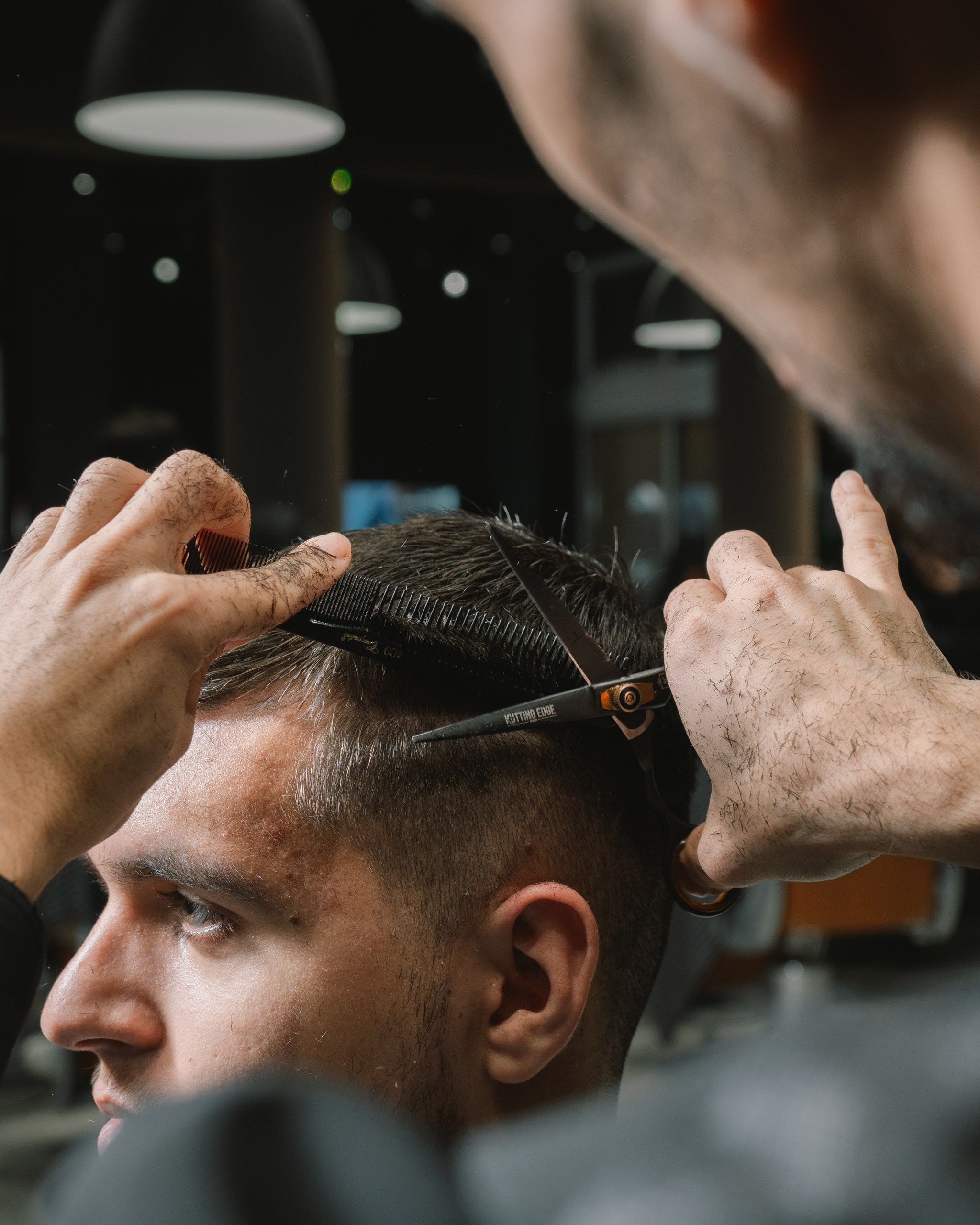
You sit in the chair. Your barber sprays your hair damp and cuts it wet. Then they blow-dry it and style it dry. You wonder why they don't just cut it the way you're going to wear it.
This seems backwards. If your hair is styled dry every day, why not cut it dry? Why go through the wet-cut-dry-style process?
The answer is technical. Wet cutting gives barbers accuracy and control. Dry styling shows both you and your barber what the cut actually looks like in the real world.
Here's exactly why this process works and what would go wrong if your barber skipped either step.
Wet Hair Cuts More Accurately
Damp hair behaves predictably. Every strand weighs the same, falls the same way, and responds to scissors the same way. This consistency lets barbers cut with precision.
Why this matters: When your barber cuts a section to two inches, they need every hair in that section to actually be two inches. On dry hair, some strands might be standing up from static, some might be compressed from your hat, some might be styled with product. None of that shows true length.
What wet hair does: It eliminates all those variables. Damp hair hangs naturally under its own weight, showing real length without interference from styling, static, or product buildup.
The result: Your barber can measure and cut accurately knowing the hair will behave consistently across your entire head.
What happens if they cut dry: Uneven results. The sections that were standing up get cut shorter than intended. The sections that were flat get cut to the right length. You end up with inconsistency that only shows up when you wash your hair and it all reverts to its natural state.
Wet Hair Shows Natural Texture and Fall
Dry hair, especially if you've styled it or slept on it, doesn't show how it naturally wants to behave. Wet hair resets everything to baseline.
Why this matters: Your barber needs to see how your hair naturally falls so they can work with it instead of against it. Cowlicks, growth patterns, natural wave or curl all show up clearly on damp hair.
What they're checking: Which way your hair grows at the crown, where your natural part falls, how much wave or curl you have, and where problem areas like cowlicks create challenges.
The cutting adjustment: Once they see these patterns on damp hair, they can cut in ways that work with them. A cowlick gets cut shorter or layered differently. Natural wave gets accounted for in the length.
What happens if they ignore this: The cut looks great styled in the chair, then fails at home when your hair reverts to its natural patterns and the cut wasn't designed for them.
Scissors Work Better on Damp Hair
Dry hair creates friction against scissor blades. Damp hair has a slight moisture coating that lets scissors glide through smoothly.
Why this matters: Cleaner cuts mean less damage and better-looking hair. When scissors have to force through dry hair, they can crush or tear the hair shaft instead of making a clean slice.
What you hear: The sound is different. Scissors cutting properly dampened hair make a crisp, clean snipping sound. Scissors struggling through dry hair sound rougher and feel like they're pulling.
The long-term effect: Over time, cutting on dry hair creates more split ends and damage than cutting on damp hair. If you're getting haircuts every 3-4 weeks, this cumulative damage adds up.
Drying Shows the Real Result
After cutting on damp hair, your barber dries and styles it to show you what the cut actually looks like in real-world conditions.
Why this matters: Wet hair looks completely different from dry hair. It's darker, flatter, longer, and has no volume. You can't judge a haircut accurately on wet hair.
What drying reveals: The actual shape and proportions of the cut. How much volume it has. Whether it needs adjustments. How it responds to heat and styling.
The quality check: This is where your barber assesses their own work. They cut based on wet hair showing true length and texture. They style based on dry hair showing the final result.
What happens without drying: You leave with damp hair, it dries on its own during your commute, and you see the final result in your bathroom mirror instead of in the barbershop where adjustments could be made.
Blow-Drying Adds Shape and Volume
Cutting creates the foundation. Blow-drying creates the finished look.
Why this matters: Most cuts need some amount of blow-drying to show their intended shape. Hair that air-dries often falls flat or dries unevenly.
What blow-drying does: Adds volume at the roots, creates direction and movement, and sets the hair in a specific shape. This is especially important for textured cuts, pompadours, or anything with significant volume.
The technique matters: Your barber is blow-drying in specific directions to show you how the cut is designed to be styled. They're not just drying it randomly, they're styling it intentionally.
What you're seeing: The final version of the cut. This is what it should look like when you style it yourself at home following the same techniques.
Styling Shows You How to Maintain It
When your barber dries and styles your hair, they're not just showing off the cut. They're demonstrating how you should style it yourself.
Why this matters: A great cut that you can't recreate at home is useless. The dry styling step is your barber teaching you how to make the cut work.
What to watch: Which direction they blow-dry, how much product they use, where they apply it, how they work it through your hair. These details determine whether you can replicate this at home.
Ask questions: "What are you doing right now?" or "How do I do this myself?" Most barbers will explain their technique while they work.
The difference: Guys who pay attention during the styling step can recreate the look at home. Guys who zone out struggle to make their hair look like it did leaving the barbershop.
When Barbers Cut Dry Instead
There are exceptions where barbers cut on dry hair, not damp.
Very curly or coily hair: Some barbers who specialize in textured hair cut it completely dry so they can see and work with the natural curl pattern. Cutting curly hair wet can lead to it being too short when it dries and springs up.
Clipper fades on very short hair: Once hair is shorter than half an inch, the benefits of dampness decrease. Most barbers fade on dry hair because clippers work better without moisture interference.
Final detailing and edges: The finishing touches around your hairline, sideburns, and neckline are usually done on dry hair so the barber can see exactly how it lays.
Specific texturizing techniques: Some barbers prefer to texturize or thin on dry hair because they can see the immediate effect better than on damp hair.
Dry cutting specialists: Some barbers have developed techniques for cutting longer hair completely dry. This works but requires significant skill and isn't the standard approach.
The Damp-Not-Soaking-Wet Distinction
Your barber keeps your hair damp during cutting, not dripping wet. There's a specific moisture level they're maintaining.
Too wet: Water drips on you and pools in sections. Hair clumps together making it hard to see individual strands. Scissors slip instead of cutting cleanly.
Too dry: Hair develops static, won't stay where it's placed, and doesn't show natural fall. Scissors create more friction and don't cut as cleanly.
Just right: Hair is damp enough to control, show natural patterns, and cut smoothly, but dry enough that barbers can see what they're doing and sections don't stick together.
The constant adjustment: This is why your barber keeps using the spray bottle throughout the cut. Hair dries at different rates in different areas, and they're maintaining optimal dampness in each section as they work.
What Happens If You Leave With Damp Hair
Some guys are in a rush and want to leave right after the cut without waiting for drying and styling.
What you miss: Seeing the actual final result. Your barber hasn't finished the service. You're leaving with an incomplete haircut.
How it dries: Hair that air-dries rarely looks as good as hair that's been blow-dried and styled intentionally. It often dries flat, uneven, or without the shape the cut was designed for.
The first impression problem: The first time you see your haircut shouldn't be in your bathroom mirror after it randomly air-dried. It should be in the barbershop mirror after your barber styled it properly.
When it's okay: If you're getting a very short buzz cut or clipper cut where styling doesn't matter, leaving with damp hair is fine. For anything with length or texture, stay for the styling.
Toronto Winter Considerations
Toronto's winter creates specific challenges for the wet-cut-dry-style process.
Indoor heating dries hair faster: Your barber has to re-spray more frequently in winter because heated barbershop air dries hair quickly.
You're going from warm shop to freezing outside: Leaving with any dampness in your hair means it could freeze during your walk to the car or transit. Make sure your hair is completely dry before you leave in winter.
Static electricity: Winter air creates static, which makes blow-drying and styling even more important. Your barber might use anti-static products during the styling phase.
Hat compression: Winter means you're putting a hat on right after your haircut. The blow-dry and styling sets your hair in its intended shape before the hat compresses it, giving it something to return to when you remove the hat later.
The Complete Process Breakdown
Here's the full wet-cut-dry-style workflow and why each step matters:
Step 1: Assessment on dry hair - Your barber sees your current cut and how your hair behaves before touching it.
Step 2: Dampening - Spray bottle brings hair to optimal moisture for cutting.
Step 3: Cutting on damp hair - All the major cutting happens while hair is consistently damp. This creates accurate, even length.
Step 4: Re-dampening as needed - Throughout the cut, sections are re-sprayed as they dry to maintain consistency.
Step 5: Rough drying - Initial blow-dry removes excess moisture and starts adding volume.
Step 6: Styling - Final blow-dry with technique, adding product, creating the finished shape.
Step 7: Detail work - Final touches on dry, styled hair to perfect edges and shape.
Skipping any of these steps compromises the final result. The process exists for technical reasons, not tradition.
Why Some Guys Think Their Barber "Can't Cut Dry Hair"
If you've ever asked your barber to cut your hair dry and they declined or said it wouldn't work as well, they're right.
It's not a skill limitation: Cutting dry hair isn't harder, it's less accurate. Barbers avoid it because the results aren't as good, not because they can't do it.
The variables multiply: Dry hair has static, styling products, compression from hats, irregular moisture levels, and inconsistent texture. All of these make precision cutting harder.
The risk increases: One section might cut perfectly while another section cuts too short because the hair was standing up from static. These inconsistencies only become obvious after you wash the cut and everything returns to baseline.
Quality standards: Barbers who care about consistent results use techniques that maximize accuracy. Wet cutting does that. Dry cutting introduces too many variables.
What to Expect From the Styling Step
When your barber finishes cutting and starts blow-drying, here's what should happen:
They dry with intention: The blow-dryer isn't randomly pointed at your head. They're drying in specific directions to create shape and volume.
They use the right amount of product: Watch how much they use. It's probably less than you think. Most guys over-apply product at home.
They show you the technique: Good barbers will talk through what they're doing if you're paying attention. "I'm blow-drying forward here to create this texture" or "I'm applying product to damp hair and working it through evenly."
They check for symmetry: They'll look at both sides, the back, and the overall shape to make sure everything is even and working together.
They make final adjustments: If something doesn't look right when dry, they'll make small corrections with scissors or clippers.
This step takes 5-10 minutes and is as important as the cutting itself.
The Bottom Line
Barbers cut on damp hair because it's accurate, shows natural patterns, and cuts cleanly with minimal damage. They dry and style it to show you the actual final result and teach you how to maintain it.
Wet cutting isn't outdated or unnecessary. It's the technique that produces the most consistent, accurate results across different hair types and conditions.
The drying and styling step isn't optional. It's how you see what you're actually getting and learn how to recreate it yourself.
Next time your barber sprays your hair damp and then blow-dries it after cutting, you'll understand exactly why that process exists and what each step accomplishes.
Book your appointment today at any Rendezvous location. Our barbers use proper wet-cutting techniques for accuracy, then style your hair dry to show you exactly how it's designed to look. You leave understanding both the cut and how to maintain it.






.jpg)