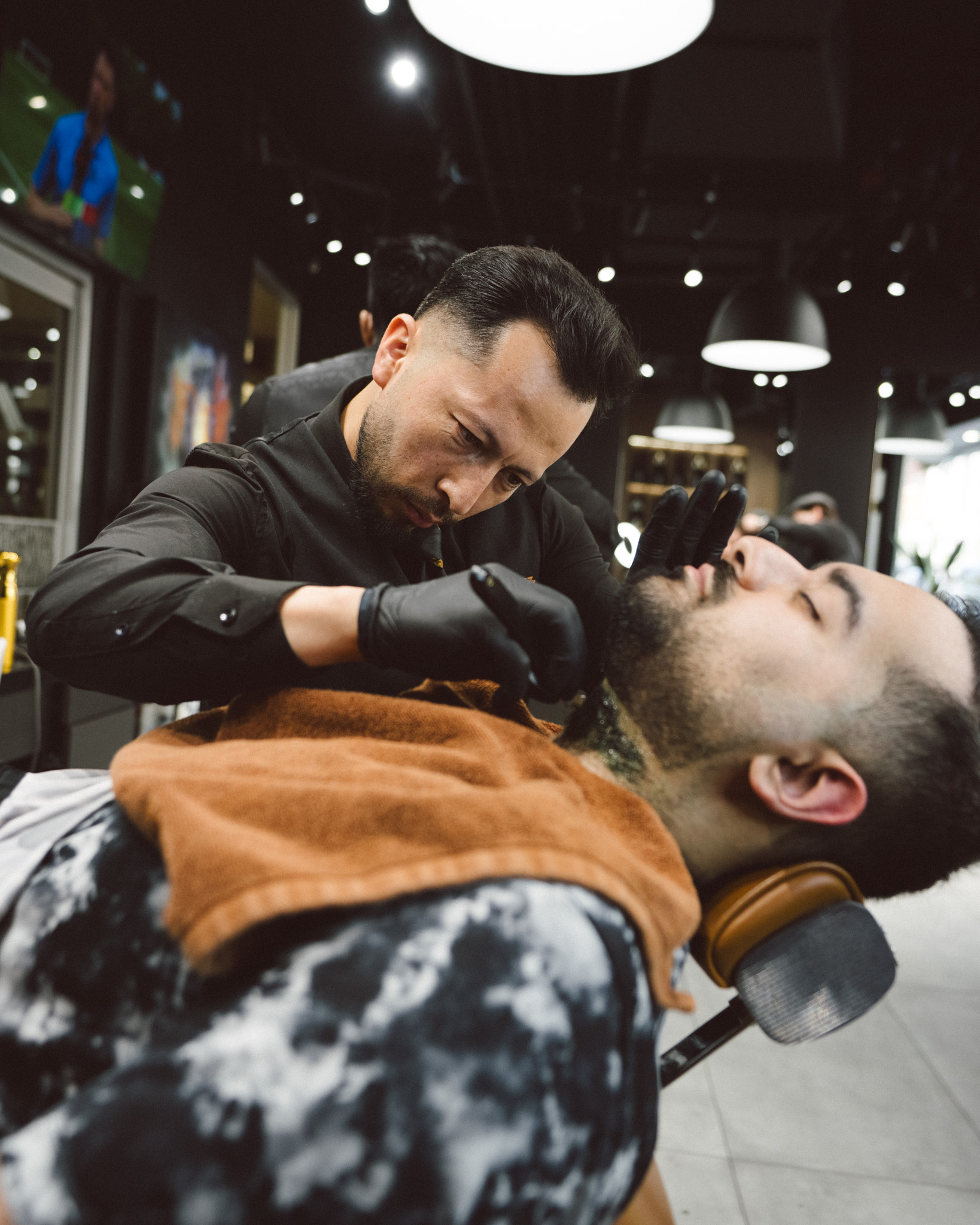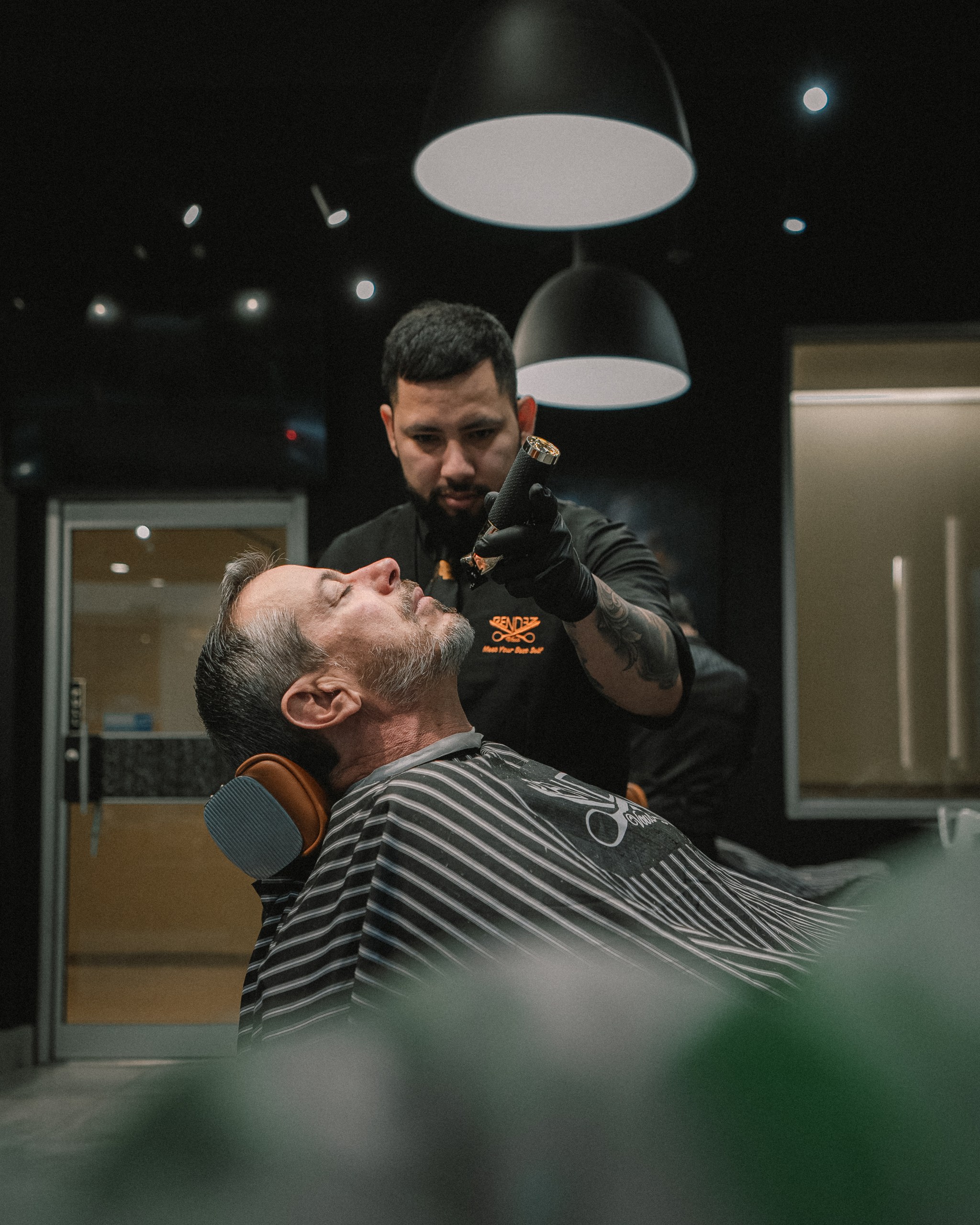
You leave the barbershop looking great. Two weeks later you're wondering if you need another cut or if you can stretch it longer. Four weeks in and you're definitely overdue but you're trying to make it to payday.
There's no universal answer to how often you should get a haircut because different cuts have different lifespans. A skin fade grows out noticeably in days. A longer scissor cut can look intentional for over a month.
Here's how long each type of cut actually lasts, what happens as it grows out, and how to know when you've waited too long.
Fades and Tapers: 2-3 Weeks Maximum
Fades are the shortest-lived cuts because they rely on extreme precision and contrast. When that precision breaks down, the entire cut stops working.
Week 1: Your fade looks exactly like it did walking out of the shop. Clean lines, perfect blending, sharp edges.
Week 2: Still looks good but you can see regrowth starting. The fade is slightly less dramatic. The neckline and edges are getting fuzzy.
Week 3: Noticeably grown out. The fade has lost most of its definition. The contrast between your top and sides is less obvious. You're past optimal but not completely unkempt.
Week 4: Overdue. The fade is essentially gone. What was a clean gradient is now just varying lengths with no clear blending.
How long you should actually wait: 2-3 weeks. If you want your fade to look consistently sharp, book every 2 weeks. If you can tolerate it looking slightly grown out, stretch to 3 weeks maximum.
Cost consideration: Fades are expensive to maintain because of the frequency. Budget $80-120 per month if you're keeping a fade fresh in Toronto ($50-60 per cut, twice monthly).
The cheaper alternative: Get edge-ups between full cuts. A neckline and edge cleanup costs $20-30 and takes 15 minutes. Do a full cut every 3-4 weeks with an edge-up at week 2. This extends how good your fade looks without paying for two full haircuts monthly.
Standard Short Cuts: 3-4 Weeks
Short cuts without fades (just clippers on the sides with a taper, scissors on top) last longer because there's less dramatic contrast and the regrowth blends in more naturally.
Week 1-2: Looks fresh. Holds shape well.
Week 3: Starting to look grown out but still intentional. The neckline needs cleaning up.
Week 4: Needs a cut. Hair is noticeably longer, shape is getting lost, neckline looks messy.
Week 5: Overdue. You're in the awkward grown-out phase where it's too long to look like a fresh short cut but too short to be styled as a longer cut.
How long you should actually wait: 3-4 weeks. Three weeks if you're maintaining a polished look for professional environments. Four weeks if you're more casual or comfortable with slightly grown-out hair.
Cost consideration: $50-60 per cut in Toronto, once monthly. Budget $600-720 annually for haircuts.
How to extend it: Ask your barber to leave slightly more length so the cut grows out more gracefully. The difference between cutting to 2 inches on top versus 2.5 inches is barely noticeable fresh but adds a week to how long it looks good.
Textured Crops and Medium-Length Styles: 4-5 Weeks
Cuts with more texture and movement on top (textured crops, French crops, longer pompadours) hide regrowth better because the style isn't based on precision lines.
Week 1-3: Looks great. The texture actually improves slightly as it grows because there's more hair to work with.
Week 4: Still looks intentional. Might need a neckline cleanup but the overall shape holds.
Week 5: Getting long. The shape is starting to lose definition. Edges and neckline definitely need attention.
Week 6: Too long. The cut has grown past its intended shape and either needs trimming or you're committing to growing it longer.
How long you should actually wait: 4-5 weeks. These cuts are designed to last longer between appointments because the texture hides regrowth.
Cost consideration: $50-60 per cut, roughly every 5 weeks. About $520-600 annually.
How to extend it: Use product to reshape and add texture as it grows. A good styling product can make week 5 or 6 look intentional when it would otherwise look grown out.
Longer Styles (Shoulder-Length or Past Ears): 5-6 Weeks
Longer haircuts rely on shape and layers, not precision edges. This means they grow out more gradually and stay looking intentional longer.
Week 1-4: Looks exactly as intended. Length doesn't change enough to notice.
Week 5-6: Starting to need shaping. The layers are growing out and the overall silhouette is getting heavier.
Week 7-8: Overdue for a trim. Hair is noticeably longer, ends might be splitting, shape is lost.
How long you should actually wait: 5-6 weeks for maintaining a specific shape. Longer if you're actively growing it out and just need occasional shaping.
Cost consideration: Longer cuts often cost slightly more ($55-70 in Toronto) because they take more time. But you're going less frequently, so annual cost is similar or even less than maintaining short cuts.
How to extend it: Focus on health over shape. If your hair is healthy and the ends aren't splitting, you can stretch to 7-8 weeks. If you're seeing damage, book sooner.
Buzz Cuts: 3-4 Weeks
Buzz cuts are uniform length all over, which means regrowth is very obvious because every part of your head grows at the same rate.
Week 1-2: Looks exactly right.
Week 3: Noticeably longer. Still acceptable but clearly not fresh.
Week 4: Needs cutting. The uniform length you wanted is gone.
How long you should actually wait: 3-4 weeks. Buzz cuts are simple and fast (15-20 minutes), so there's less reason to stretch the timing.
Cost consideration: Buzz cuts are often cheaper ($35-40 in Toronto) because they're faster. Combined with the frequency, you're looking at $420-520 annually.
DIY option: Many guys with buzz cuts learn to do it themselves with clippers. One $50 set of clippers pays for itself after two barbershop visits. But professional buzz cuts still look cleaner because barbers have better tools and can see angles you can't.
What Actually Happens When You Wait Too Long
Stretching your haircut past its optimal window creates specific problems beyond just looking less sharp.
The shape breaks down. Haircuts are designed to look a certain way at a certain length. When hair grows past that length, the intended shape disappears and you're left with something that looks unplanned.
Styling becomes harder. Products and techniques that worked when your hair was the right length stop working when it's grown out. You're fighting your hair instead of working with it.
The neckline looks terrible. This is the first thing that makes you look unkempt. An overgrown neckline is immediately noticeable and makes even an otherwise decent cut look neglected.
You enter the awkward phase. There's a period between "intentionally short" and "intentionally longer" where hair just looks like you forgot to get it cut. This phase is uncomfortable and makes you look less put-together.
Damage accumulates. The longer you wait, especially on longer styles, the more split ends and damage develop. When you finally do get cut, your barber has to remove more length to get rid of damage.
How to Know You've Waited Too Long
Beyond the timelines above, here are the signs you're overdue regardless of cut type.
Your neckline is visibly fuzzy or uneven. This is the clearest signal. A clean neckline is essential to looking groomed. When it's grown out, nothing else about your cut matters.
You can't style it the way you want anymore. If your routine stops working and your hair won't cooperate, it's probably too long for the cut you have.
People start commenting. If anyone says "you need a haircut" or asks when you're getting cut, you're past due.
You're thinking about it constantly. When you check your hair in every mirror and feel self-conscious about how it looks, book an appointment.
Your barber takes longer than usual. If your next cut takes significantly longer because there's so much extra length to remove, you waited too long.
How to Stretch Time Between Cuts Without Looking Bad
If you need to extend your cut past the optimal window, here's how to do it without looking unkempt.
Get edge-ups or cleanups between full cuts. Neckline and edge maintenance ($20-30, 15 minutes) makes a huge difference in how polished you look even when the overall cut is grown out.
Use product strategically. Texture paste, wax, or pomade can reshape and add definition to grown-out hair, making it look more intentional.
Style it differently. What worked fresh from the barber might not work at week 5. Adapt your styling approach as your hair grows.
Keep the neckline clean yourself. If you're comfortable with clippers, cleaning up your own neckline between cuts extends how long the overall cut looks good.
Communicate with your barber. Tell them you're trying to stretch to 5 or 6 weeks instead of 4. They can cut in ways that grow out more gracefully.
The Cost-Per-Week Reality
Looking at haircuts as cost per week instead of cost per visit changes the value calculation.
Fades at 2-week intervals: $50 per cut, twice monthly = $100/month = $25/week
Standard cuts at 4-week intervals: $50 per cut, monthly = $50/month = $12.50/week
Longer cuts at 6-week intervals: $60 per cut, every 6 weeks = $40/month = $10/week
The cheaper cut per week is actually the longer style because you're going less frequently. Fades are the most expensive way to maintain hair on a weekly cost basis despite the per-cut price being the same.
This matters when budgeting. If $600 annually for haircuts feels like a lot, switch to a cut that lasts longer between appointments.
Toronto Seasonal Considerations
Your haircut frequency might change based on Toronto's seasons.
Winter (November-March): Guys often let cuts go longer because hats hide overgrown edges and necklines. You can stretch an extra week without anyone noticing.
Spring (April-May): The transition period where guys either stick with winter length or go shorter for summer. Frequency often increases as hats come off.
Summer (June-August): Shorter cuts and more frequent appointments. Heat makes longer hair uncomfortable. Fades and short cuts spike in popularity.
Fall (September-October): Another transition. Some guys grow out summer cuts for winter, some maintain their length year-round.
Consider adjusting your schedule seasonally instead of maintaining the same frequency all year.
How Maintenance Frequency Affects Your Relationship With Your Barber
Guys who come in regularly every 2-3 weeks build stronger relationships with their barbers than guys who show up every 2 months.
Benefits of regular visits:
- Your barber learns your hair patterns and preferences faster
- You get priority booking because you're a consistent client
- Small adjustments and tweaks are easier when your barber sees you frequently
- You develop the rapport that makes each visit smoother
If you can't afford frequent visits:
- Be upfront about your budget and timeline
- Book standing appointments when you know you'll need them
- Consider cheaper cuts that last longer instead of expensive cuts you can't maintain
Your barber would rather see you every 5 weeks consistently than every 3 weeks sporadically.
The Bottom Line
How long you should wait between haircuts depends entirely on what you're wearing and how polished you need to look.
Fades demand the most frequent maintenance at 2-3 weeks. Standard short cuts last 3-4 weeks. Textured medium-length styles go 4-5 weeks. Longer cuts can stretch to 5-6 weeks or more.
Watch your neckline. That's the first thing that makes you look unkempt and the clearest signal you're overdue.
Budget matters. Factor in frequency when choosing a cut. A $50 cut every 2 weeks costs more annually than a $60 cut every 6 weeks.
If you need to stretch timing, get edge-ups between full cuts, use product strategically, and communicate with your barber about cutting for longer wear.
Book your appointment today at any Rendezvous location. Tell us how often you're realistically planning to come in and we'll cut accordingly. We'd rather give you a cut that lasts your actual schedule than an ideal cut you can't maintain.






.jpg)