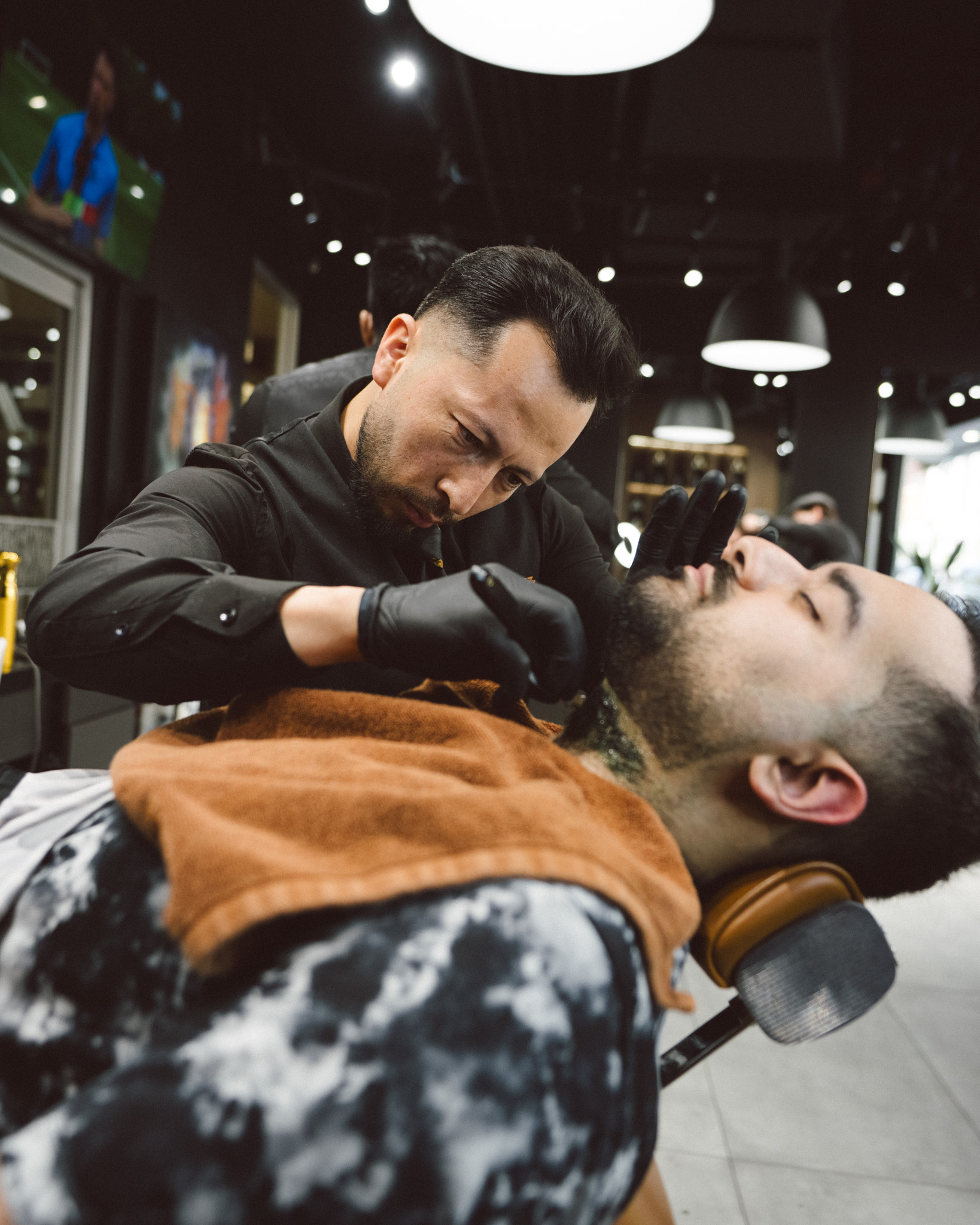
Fades are everywhere. Scroll through any barbershop's Instagram in Toronto and you will see fade after fade. But posting fades online and executing them consistently on every head that sits in the chair are two very different things.
A fade is one of the most technically demanding cuts a barber can do. It requires blending hair from skin or near-skin length into longer hair above, with no visible lines, no patches, and no harsh transitions. The margin for error is tiny. One wrong pass with the clippers and the whole blend is off.
That is why finding the right barber for a fade matters more than finding the right barber for a standard scissor cut. With a regular cut, small imperfections hide in the length. With a fade, everything is exposed.
What Makes a Good Fade
Before you start looking for a barber, you need to understand what a quality fade looks like.
The blend is seamless. Run your hand up the side of your head from the bottom to the top. You should feel a gradual transition from short to long with no bumps, ridges, or sudden length changes. If you can feel where one guard ended and another began, the blend is not clean.
Both sides match. This sounds obvious but it is surprisingly common for fades to be slightly uneven. Your barber should be checking symmetry throughout the cut, not just at the end. Bone structure, cowlicks, and hair density differ between your left and right sides. A skilled barber accounts for that.
The hairline is sharp. A good fade finishes with a clean, defined hairline around the ears, temples, and neckline. This framing work is what makes a fresh fade pop. Sloppy edges ruin an otherwise perfect blend.
It grows out well. This is the test people forget. A fade that looks incredible for two days and then turns into a mess by day five was not cut properly. A well-executed fade should look presentable for at least a week, and still decent at the two-week mark depending on your growth rate.
Why Not Every Barber Can Fade
Barbering programs in Ontario teach the fundamentals. Clipper work, scissor cutting, shaving, sanitation. But fading is a specialization that takes hundreds of hours of practice beyond what school covers.
The technique involves working with multiple clipper guards and using lever adjustments between guards to create micro-transitions. Some barbers use a combination of clippers and trimmers for the final blend. Others use a technique called clipper-over-comb for the transition zone. The method varies, but the result should be the same: invisible blending.
Some barbers trained in traditional barbering focus on scissor cuts and classic styles. They can cut hair beautifully but fading is not their strength. That does not make them bad barbers. It means their skill set is different.
When you are looking for a fade specialist in Toronto, you want someone who does fades all day, every day. Volume matters. A barber who does fifteen fades a week has sharper instincts for blending than one who does three.
How to Evaluate a Barber's Fade Work
Check their Instagram or portfolio. This is the first and easiest filter. Look at their posted fades. Are they clean? Do they work on different hair types? Pay attention to the blend zone. Zoom in. If you can see lines or uneven blending in a photo that has good lighting and was chosen specifically for posting, imagine what the average Tuesday afternoon cut looks like.
Look at variety. A barber who only posts one type of fade on one type of hair might struggle when your hair is different. Look for fades on straight hair, curly hair, coarse hair, fine hair, thick hair, and thinner hair. Toronto is a diverse city. Your fade barber should have experience across that diversity.
Read Google reviews. Search for the barbershop and filter reviews that mention fades specifically. Guys who get good fades talk about it. Guys who get bad fades talk about it louder.
Ask for a consultation. Walk into the shop or message them online. Tell them what you want. A good fade barber will ask about your hair type, your growth patterns, how long you want it on top, how low you want the fade to go, and how often you plan to come back. If they do not ask questions, they are not planning the cut around your specific head.
Types of Fades and Where to Get Them in Toronto
Fades come in several variations and the one you choose should match your face shape, hair type, and personal style.
Low fade starts the blend just above the ear. It is the most conservative option and works well in professional settings. The transition is subtle. You get a clean look without anything too dramatic on the sides. This is the most popular fade in Toronto's financial district and corporate environments.
Mid fade starts the blend roughly at the temple line. It is the most versatile option and what a lot of guys picture when they say "I want a fade." Enough contrast to look sharp, not so high that it feels extreme. This is the most commonly requested fade across Toronto barbershops.
High fade starts the blend well above the temple, sometimes almost at the top of the head. It creates strong contrast between the faded sides and the hair on top. This works well with textured crops, pompadours, and styles where the top has a lot of volume or length. High fades require more maintenance because the contrast grows out faster.
Skin fade takes the blend all the way down to the skin. No guard at the bottom. This is the sharpest, cleanest version of a fade and also the one that requires the most skill and the most frequent maintenance. A skin fade starts looking grown out within a week for guys with fast-growing hair. If you are getting a skin fade, plan on visiting your barber every two to three weeks.
Burst fade curves around the ear in a semicircular pattern rather than following a straight horizontal line. It pairs well with mullets, longer styles, and guys who want something slightly different from the standard fade shape.
Taper fade is the most gradual version. The transition is slow and subtle, starting long at the top and barely fading at the bottom. It is the gentlest option and works well for guys who want a polished look without the sharp contrast of a mid or high fade.
Hair Type Matters More Than People Think
The same fade technique does not work on every hair type.
Straight, fine hair shows every imperfection in a fade. The blend needs to be precise because there is no texture to hide mistakes. Barbers working on fine straight hair need to be especially careful with their guard transitions.
Thick, coarse hair holds a fade well and tends to look fuller in the blend zone. But it requires more passes and more careful attention to density. Thick hair can create bulk in the transition area if the barber does not thin it properly.
Curly and textured hair creates natural visual blending because the curls break up the transition. But the curl pattern needs to be accounted for in the length. Curly hair looks shorter when it is stretched wet and springs up when dry. A barber who does not understand shrinkage will cut the fade too short.
Wavy hair sits somewhere in between. The wave pattern can either help or hurt the blend depending on how the barber works with it.
A good fade barber in Toronto adjusts technique based on your hair type without you having to explain what to do differently. They see it and they know. If your barber cuts your curly hair the same way they cut straight hair, find a different barber.
How Long Your Fade Should Last
A well-cut fade should look sharp for about five to seven days. By day ten it will start softening. By two weeks, the blend is noticeably grown out but still presentable if the cut was done right.
If your fade looks bad after three days, the cut was not done properly. A barber who understands blending creates a fade that grows out gracefully rather than falling apart immediately.
Your maintenance schedule depends on the type of fade you get. Skin fades need attention every two to three weeks. Mid fades can stretch to three or four weeks. Low fades and tapers can go four weeks or longer between appointments.
What a Fade Should Cost in Toronto in 2026
Fade pricing in Toronto ranges from $35 at mid-range shops to $55 and above at premium barbershops. The average sits around $40 to $50 for a quality fade from a skilled barber.
Be cautious about fades priced significantly below $30. Fading takes time and skill. If the price is very low, the barber is either rushing through the cut or lacks experience. Neither of those is good for your head.
Do not assume the most expensive shop gives the best fades either. Price reflects the experience, the environment, and the brand. The quality of the fade itself comes down to the individual barber's hands.
Where Rendezvous Fits
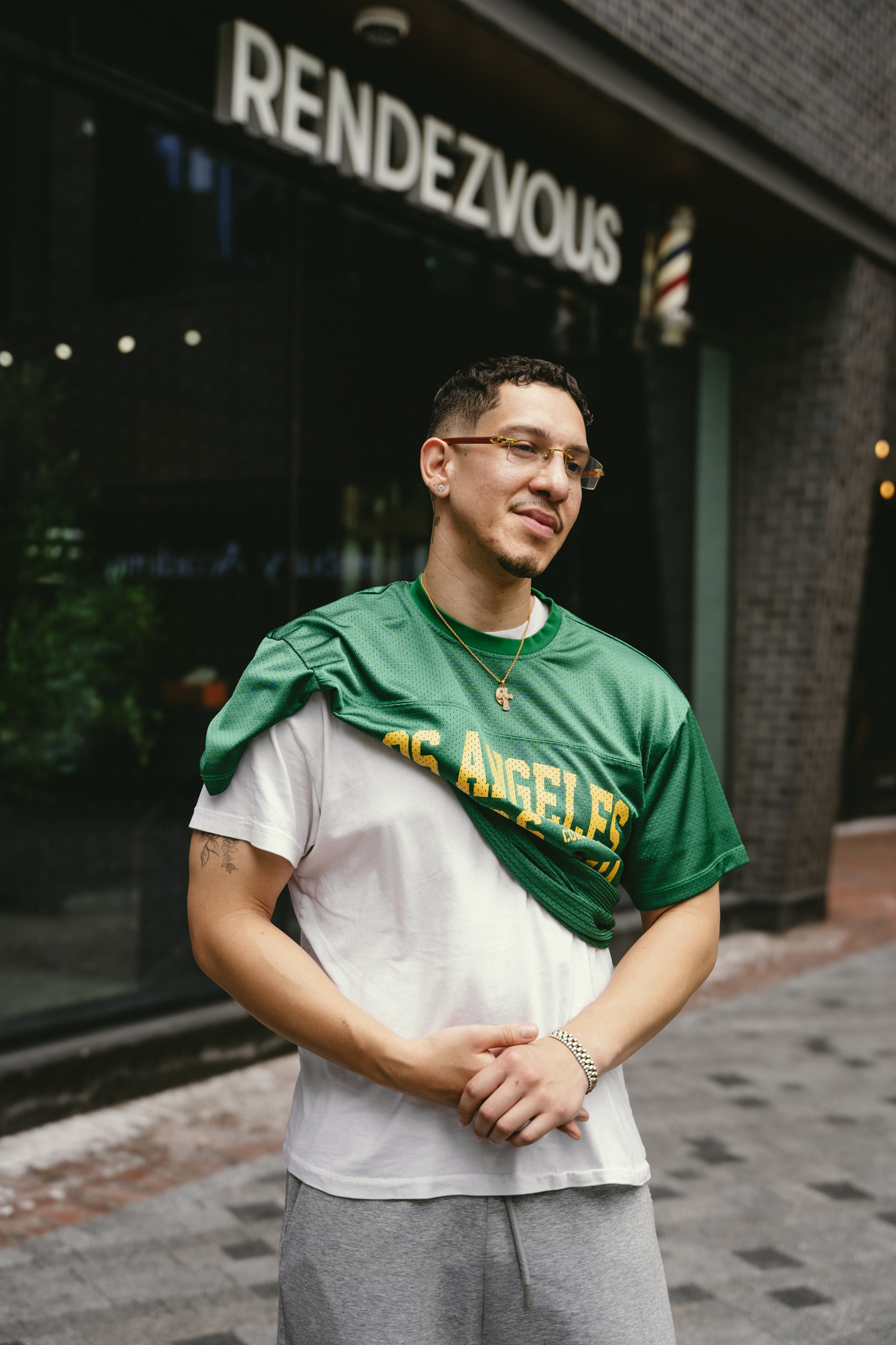
At Rendezvous, fades are core to what we do. Our barbers across all five Toronto locations have extensive experience with every type of fade on every hair type. We see the full spectrum of Toronto's diversity every single day, and our barbers know how to adjust technique for straight hair, curly hair, coarse hair, fine hair, and everything in between.
Book your appointment today at any Rendezvous location. Whether you want a subtle low taper or a sharp skin fade, we will match you with a barber who specializes in what you need. Five locations across Toronto. Book online at rendezvousbarbers.com.


.jpg)