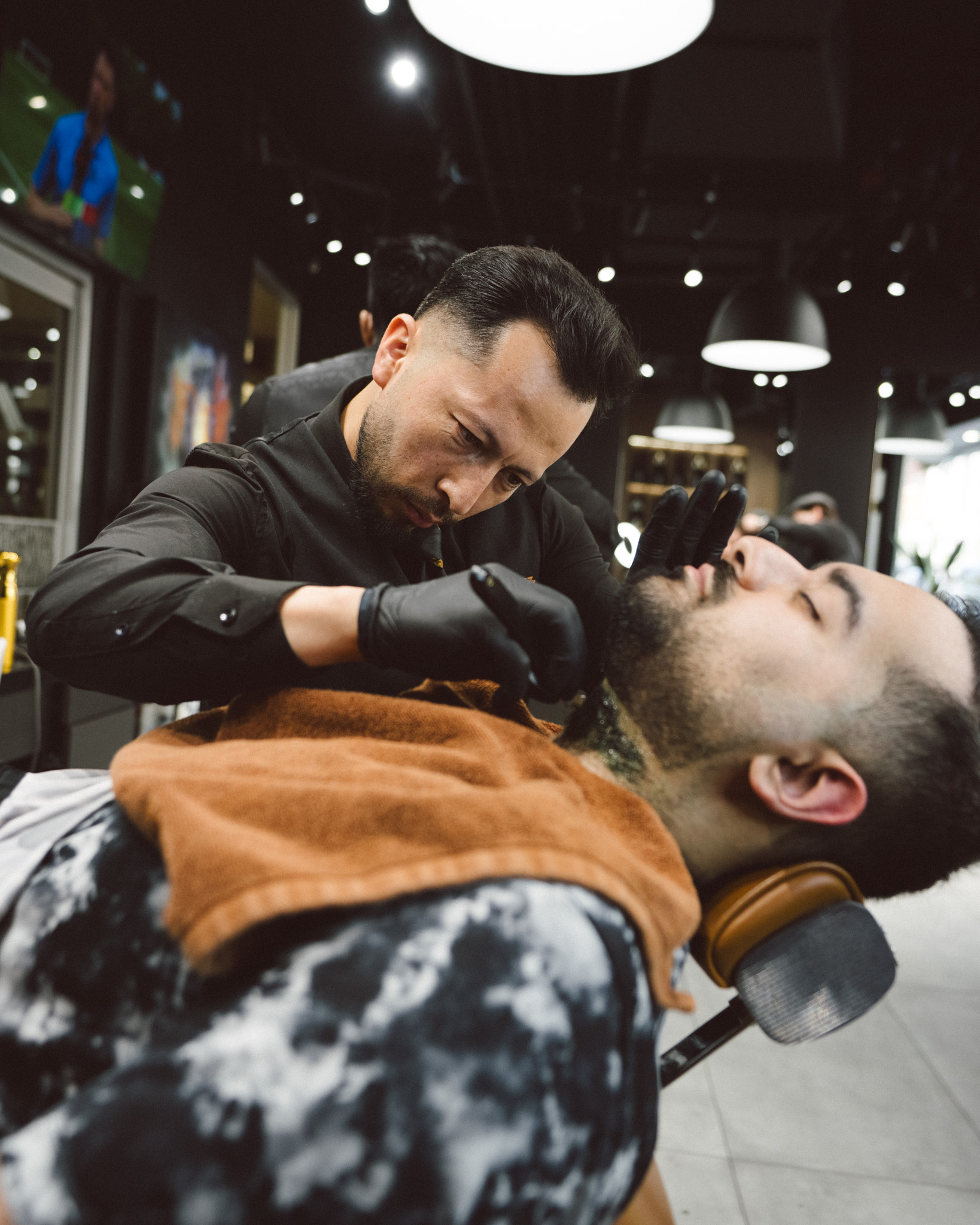
You're sitting in the chair watching in the mirror. Your barber picks up one pair of scissors, makes a few cuts, puts them down, and grabs a completely different pair. Then they switch again. You count at least three different scissors being used on your head.
You wonder if this is necessary or if your barber just has a thing for collecting scissors.
It's necessary. Different scissors do completely different things to your hair. Using the right scissors for each part of the cut is what separates a skilled barber from someone who's just going through the motions.
Here's what each type of scissors does and why your barber keeps switching between them.
Cutting Shears: The Main Scissors
These are standard barber scissors with two sharp blades that meet cleanly when closed. They're designed to cut hair completely through with a clean slice.
What they do: Remove length. When your barber is cutting your hair shorter, shaping sections, or creating the overall outline of your cut, they're using cutting shears.
What they look like: Solid blades on both sides, usually 5-7 inches long. They might be silver, black, or colored depending on the brand. The blades are smooth with no teeth or notches.
When they're used: Throughout the entire cut for all the major length work. This is the primary tool for building the foundation of your haircut.
The sound: A clean snipping sound when cutting through hair. If you hear a crisp snip-snip-snip, those are cutting shears working.
Why they can't do everything: Cutting shears remove hair completely. If your barber only used these, every cut would be blunt and heavy with no texture or lightness. That works for some styles but not most modern cuts.
Texturizing Shears: Creating Movement and Softness
Texturizing shears look like regular scissors but with teeth on one or both blades. These teeth create a different cutting pattern than solid blades.
What they do: Remove some hair but not all hair in a section. When the blades close, hair in the gaps between teeth doesn't get cut. This creates texture, softens blunt lines, and adds movement.
What they look like: One blade might be solid while the other has teeth, or both blades have teeth. The teeth vary in size and spacing depending on the specific effect the shears are designed for.
When they're used: After the main cutting is done. Your barber uses these to refine the shape, add texture to the top, soften harsh lines where different sections meet, or create that piece-y, messy look on textured crops.
The sound: Slightly different from cutting shears. More of a choppier sound because only some of the hair is being cut with each close of the blades.
Why your barber switches to these: To add dimension and movement. A cut done entirely with cutting shears looks clean but can feel heavy and one-dimensional. Texturizing shears add visual interest and make hair move naturally instead of sitting in a solid mass.
Thinning Shears: Reducing Bulk and Density
Thinning shears have teeth on both blades with wider spacing than texturizing shears. They remove a significant amount of hair from within a section without changing the outer length.
What they do: Reduce bulk and density. If your hair is very thick or coarse, thinning shears remove weight from inside the hair without making it look shorter.
What they look like: Both blades have teeth, usually with wider gaps than texturizing shears. They remove more hair with each cut than texturizing shears do.
When they're used: On thick, dense, or coarse hair that would otherwise look too heavy. Your barber might use these on the sides, the top, or anywhere that needs weight removed without sacrificing length.
The sound: Similar to texturizing shears but slightly more aggressive because they're removing more hair per cut.
Why your barber switches to these: Some hair types are naturally very dense. Without thinning shears, these cuts would look bulky and difficult to style. Thinning removes internal weight while maintaining the external shape.
The overuse problem: Too much thinning creates wispy, damaged-looking hair with no body. Good barbers use thinning shears strategically, not on every section of every head.
Why Barbers Don't Just Use One Pair of Scissors
Each type of scissors creates a different result. Using the right tool for each task produces better cuts than trying to do everything with one pair.
Cutting shears create shape. They establish the overall length and form of your haircut. They're precise and remove exactly what the barber wants removed.
Texturizing shears create movement. They take a blunt, heavy cut and add dimension, softness, and the ability to style with texture.
Thinning shears create lightness. They remove bulk from dense hair, making it easier to style and more comfortable to wear.
Using only cutting shears: Your cut would be technically accurate but visually flat. Everything would be blunt edges and solid shapes with no movement or texture.
Using only texturizing or thinning shears: Impossible to create clean lines or accurate length. These tools are refinement tools, not primary cutting tools.
Using all three strategically: Your barber builds the cut with cutting shears, refines it with texturizing shears, and removes bulk where needed with thinning shears. This layered approach creates cuts with dimension, movement, and the right amount of hair.
The Scissor-Switching Sequence You're Seeing
Here's the typical order and why your barber switches when they do.
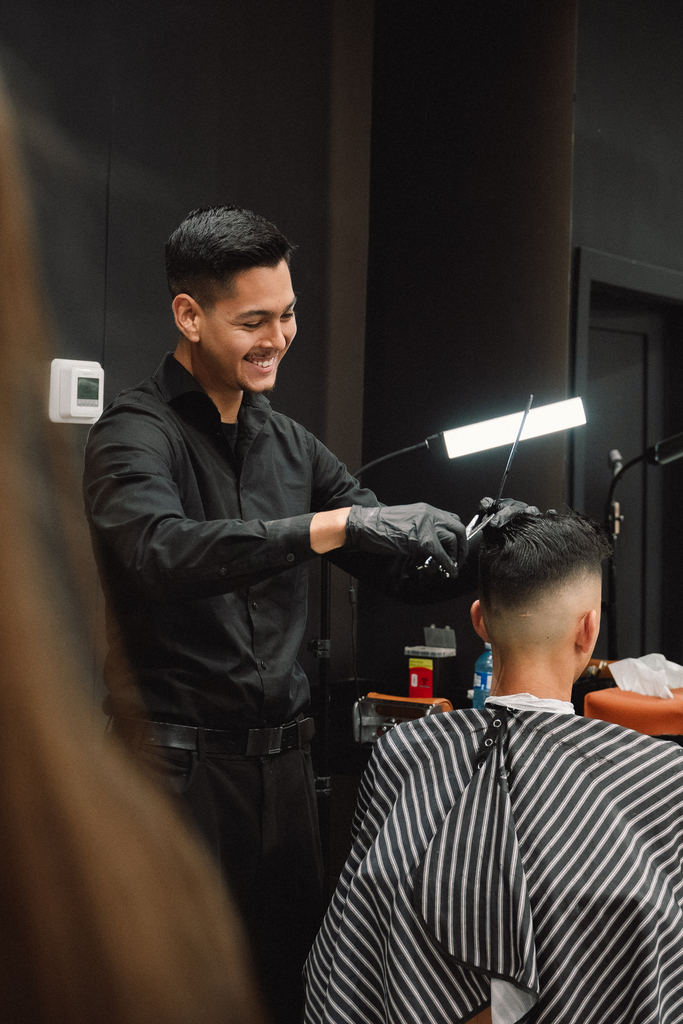
Phase 1: Cutting shears dominate. The first 70% of your haircut is done with cutting shears. Your barber is building the shape, removing length, creating the overall structure.
Phase 2: Texturizing shears appear. Once the shape is established, your barber switches to texturizing shears to add movement, soften lines, and create texture on top or around the face.
Phase 3: Thinning shears if needed. If your hair is thick or bulky in specific areas, thinning shears remove internal weight without changing the shape that's already been created.
Phase 4: Back to cutting shears for final touches. Any last-minute adjustments or detail work gets done with cutting shears for precision.
This isn't random switching. It's a deliberate sequence where each tool serves a specific purpose at a specific stage of the cut.
How to Know If Your Barber Is Using the Right Scissors
Most guys can't tell scissors apart just by looking, but you can assess whether your barber is using them correctly based on results.
Good texturizing: Your hair has movement and dimension. It doesn't sit flat or heavy. You can run your fingers through it and it falls back into place naturally.
Bad texturizing: Your hair looks choppy or wispy in spots. The texture is inconsistent, with some areas looking clean and others looking damaged or over-processed.
Good thinning: Your thick hair feels lighter and is easier to style, but still looks full and healthy. The thinning is invisible to the eye.
Bad thinning: Your hair looks stringy, wispy, or has visible gaps. You can see where hair was removed because it's uneven or excessive.
The test: If your haircut looks and feels good, has movement without looking damaged, and behaves the way you want it to, your barber is using their tools correctly.
Scissors Quality Matters
Not all scissors are created equal. Professional barbers invest in quality tools because cheap scissors produce worse results.
What makes scissors good: Sharp blades that meet precisely, proper tension adjustment, comfortable handles, durable materials that hold an edge. Quality scissors stay sharp longer and cut more cleanly.
What makes scissors bad: Dull blades that crush hair instead of cutting it, poor alignment that causes hair to slip instead of cutting, cheap materials that don't hold an edge.
Why this matters to you: A barber using sharp, quality scissors gives you cleaner cuts with less damage. A barber using dull or cheap scissors tears and damages hair even if their technique is perfect.
The investment: Professional scissors cost $200-500+ per pair. Barbers who own multiple high-quality pairs are investing in their craft. This usually correlates with skill level and attention to detail.
At Rendezvous, every barber maintains their tools properly and uses professional-grade scissors. Sharp tools are non-negotiable for quality cuts.
When Barbers Use Razors Instead of Scissors
Some barbers also use straight razors or razor combs for specific effects. These aren't scissors but they serve similar purposes.
What razors do: Create very soft, feathered texture. Razors slice through hair at an angle, creating tapered ends instead of blunt cuts.
When they're used: For soft, lived-in texture on longer hair, creating wispy bangs or face-framing pieces, or adding extreme texture to specific sections.
The look they create: Very natural, soft, beachy texture. Less structured than scissor texture.
Why not everyone uses them: Razors can cause damage if used incorrectly or on the wrong hair type. Some barbers prefer scissors for all texturizing work because they're more controlled.
What Your Hair Type Determines About Scissor Use
Different hair types require different scissor applications.
Fine, thin hair: Minimal thinning shears because there's not enough density to remove. Texturizing shears used very carefully to avoid making hair look wispy.
Thick, coarse hair: Heavy use of thinning shears to remove bulk. Texturizing shears to add movement and prevent the cut from looking too heavy.
Curly hair: Often less texturizing and thinning because curls create natural texture. Cutting shears do most of the work, with occasional texturizing to refine shape.
Straight hair: Texturizing shears essential for creating movement and preventing cuts from looking too flat and one-dimensional.
Your barber should be assessing your hair type and adjusting their scissor use accordingly. Cookie-cutter approaches that use the same techniques on everyone produce mediocre results.
The Bottom Line
Your barber switches scissors because different scissors do different jobs. Cutting shears create shape and length. Texturizing shears add movement and softness. Thinning shears remove bulk from dense hair.
Using the right tool at the right time is what creates haircuts with dimension, texture, and the right amount of hair. One pair of scissors can't do everything well.
Next time you watch your barber switch between scissors, you'll know exactly what each pair is doing and why the switching matters.
Book your appointment today at any Rendezvous location. Our barbers use professional-grade scissors and know when to switch between cutting, texturizing, and thinning shears to create cuts with proper shape, movement, and dimension.


.jpg)