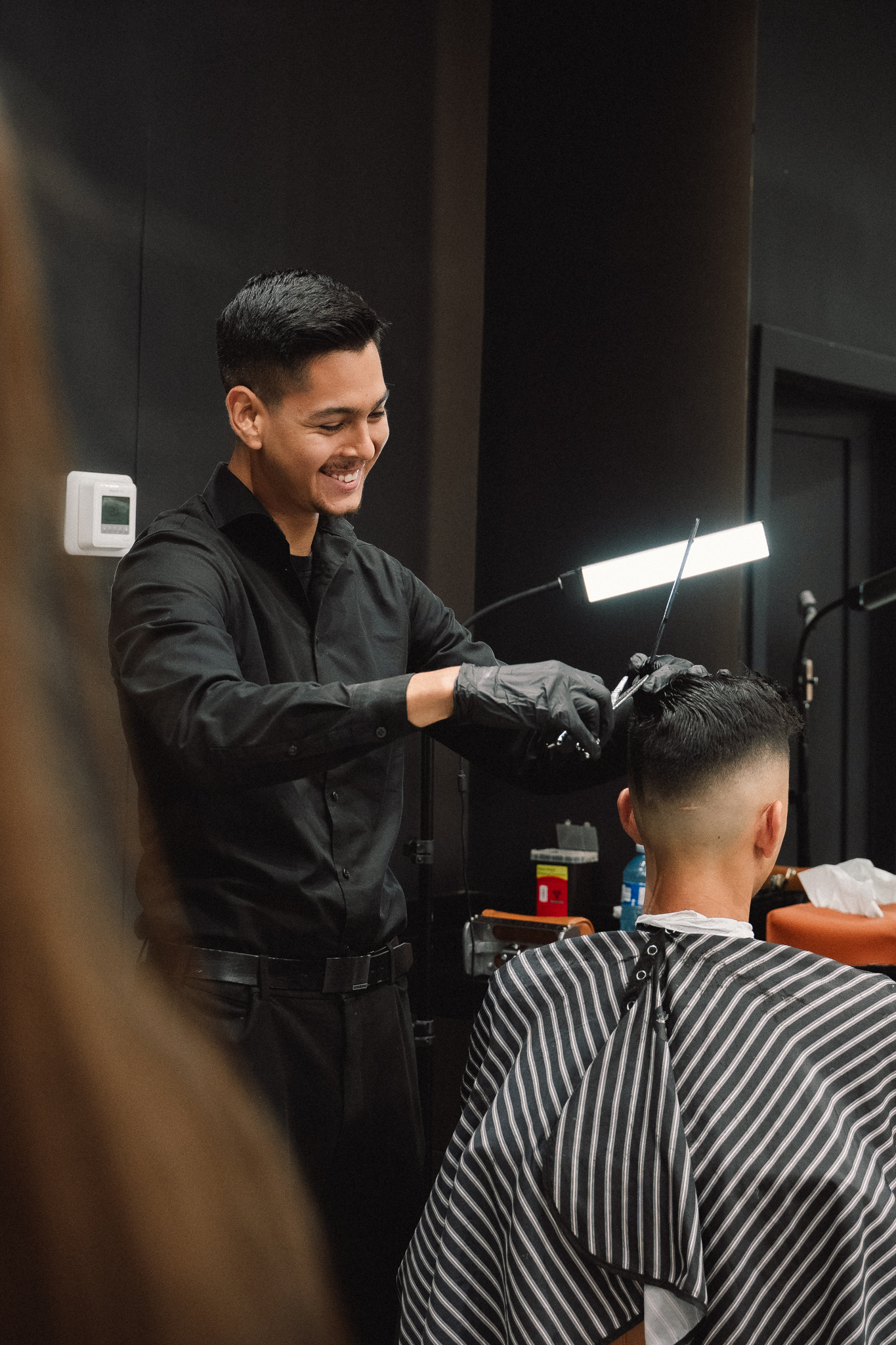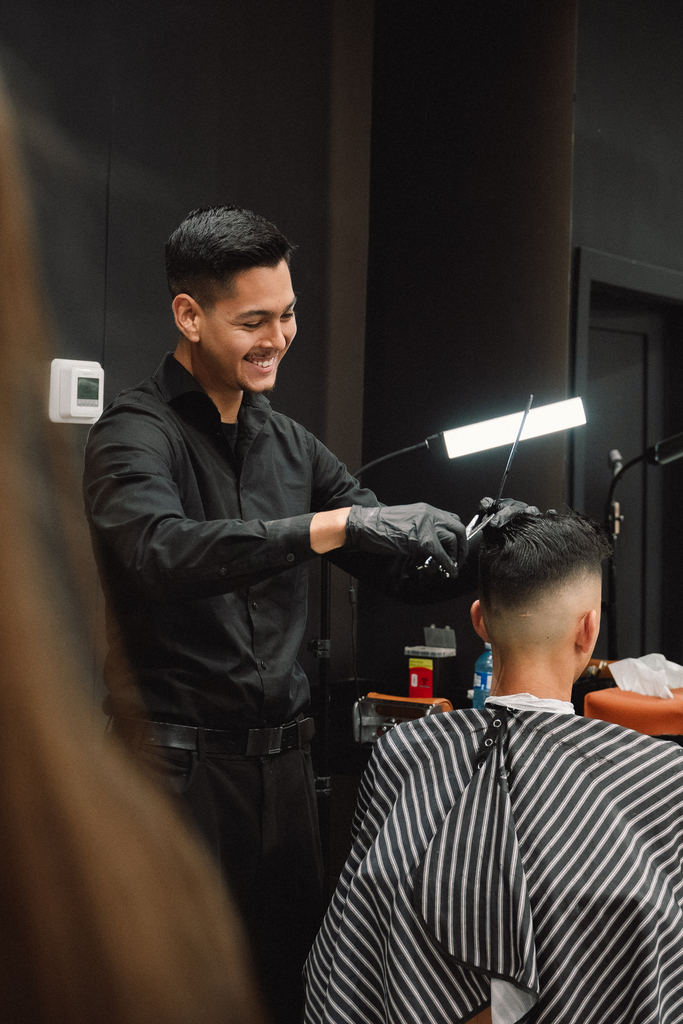
There's a moment in almost every haircut where it happens. You're mid-fade, or the barber is working through the top, and they stop, catch your eye in the mirror, and ask: "Length looking good?"
You say yes. They keep going. Then, a few minutes later — same question.
Most clients read this as uncertainty. Like their barber isn't sure what they're doing and needs constant validation before committing to the next pass of the clippers. Some guys find it reassuring. Others find it slightly annoying. A few start to wonder if they should've gone somewhere else.
What's actually happening has nothing to do with insecurity.
What the Question Is Really About
Hair is not a reversible material. Once it's gone, it's gone — at least until it grows back over the next few weeks. That reality shapes every decision a good barber makes, and it's the reason length checks exist in the first place.
When your barber asks if the length is okay, they're not asking because they don't know what they're doing. They're asking because you are the final authority on how short you want to go, and they've learned — through experience — that clients often have a different number in their head than the one they communicated at the consultation.
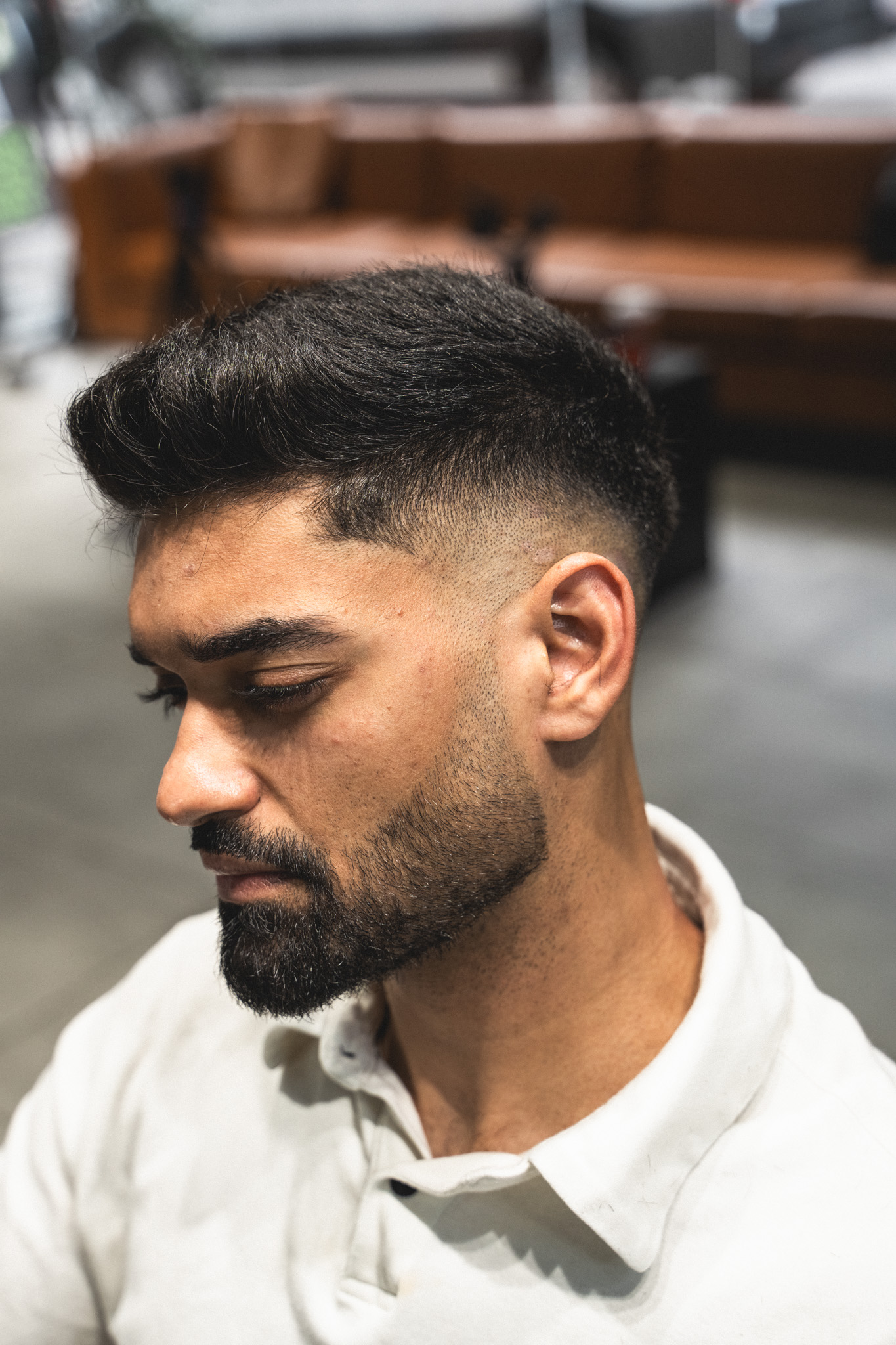
"Short on the sides" means something different to every person sitting in that chair. Some guys mean a 2 guard. Some mean a skin fade. Some mean a 4 with a tight blend. Without confirmation at key points in the cut, the barber is guessing. And guessing with scissors is how clients leave unhappy.
The length check isn't a sign of hesitation. It's a checkpoint. It's how a professional keeps you from walking out the door shorter than you wanted to be.
Why It Happens Multiple Times
Here's where it gets a bit more technical.
Hair doesn't fall the same way when it's wet versus dry. It doesn't sit the same way before blending as it does after. A section that looks fine in isolation can look completely different once the surrounding hair is shaped and settled. The cut you see at the halfway point is not the cut you'll see at the end — and the barber knows that.
So when they check in at different stages, they're showing you the work as it evolves, not as it's finished. They're giving you the chance to course-correct before course-correction is no longer possible.
Think of it like a contractor framing out a room before drywalling. You get to walk through the structure, move a wall two feet, change the doorway placement — because it's still possible to do that. Once the drywall is up and the paint is on, that conversation is over. The length check is the same concept. It's the window where adjustments are easy, fast, and cost nothing.
Barbers who skip this step entirely aren't more confident. They're usually less experienced, or they're moving too fast to care. The ones who check in are the ones paying close enough attention to know that the margin for error is narrow and the stakes are real.
The Consultation Doesn't Eliminate the Need for It
Some clients come in with a reference photo, a clear description, and a very specific request. They've done everything right. And the barber will still ask about length mid-cut.
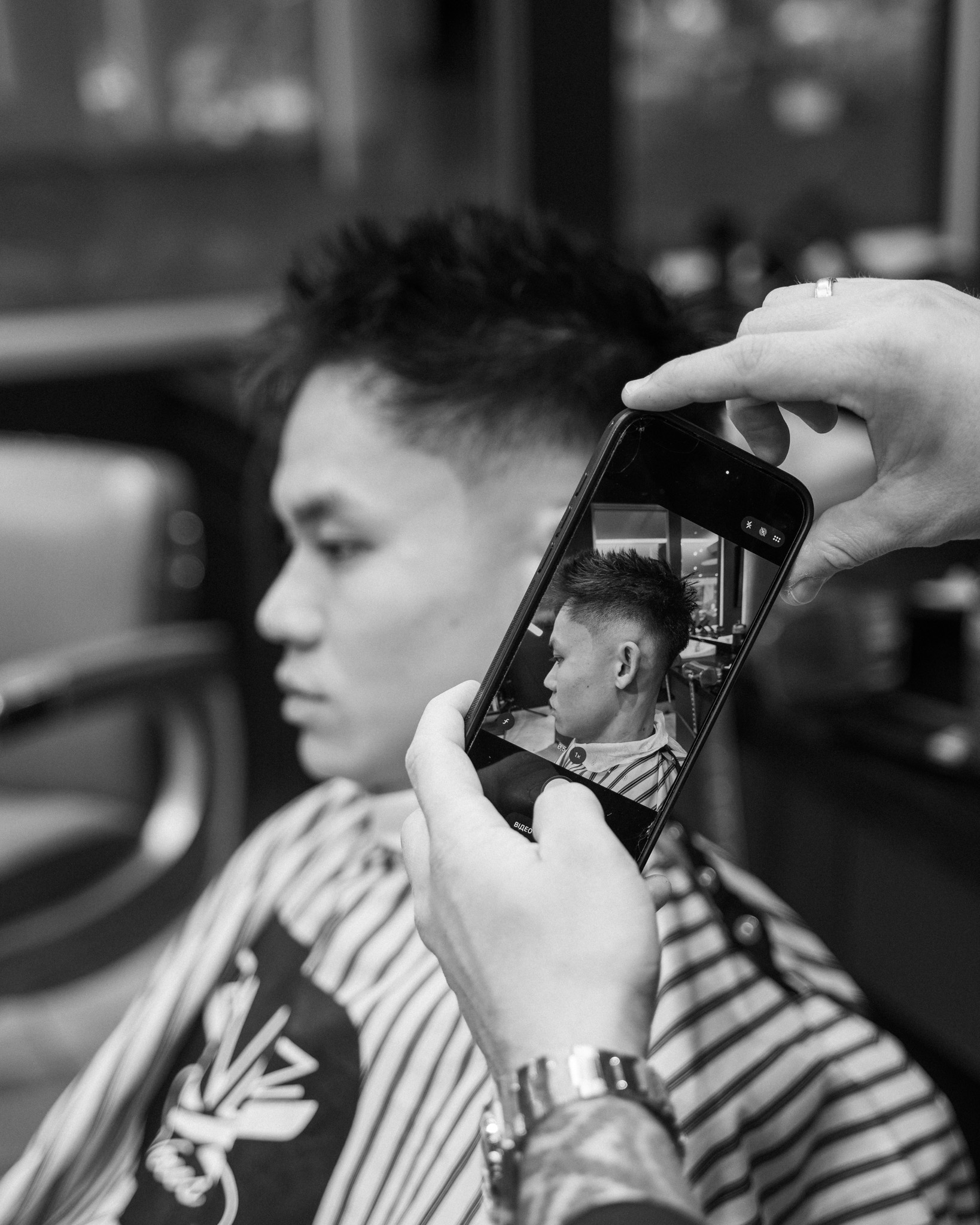
This isn't because the consultation failed. It's because photos are flat and hair is three-dimensional. What looks like "a little shorter" on a phone screen translates differently on your specific head, with your specific hair texture, your specific growth pattern. The consultation sets the direction. The length checks during the cut are how you navigate toward it accurately.
It's also worth noting that clients change their minds. Not dramatically, and usually not deliberately — but somewhere between sitting down and watching their hair get worked on, a lot of guys start to think actually, maybe a bit shorter. Or the opposite: they see the first pass and realize they want to keep more length than they initially said. The barber asking gives you the opening to say that without it being awkward.
A barber who checks in is a barber who's leaving that door open.
What Happens When Barbers Don't Ask
The alternative is a barber who locks in your consultation answer and executes it without another word. Some clients prefer this — it feels more decisive, more confident. And for clients who know exactly what they want and communicate it precisely, it works fine.
But the complaints that come out of those experiences tend to follow a pattern. "He just kept going." "I thought he'd check before going that short." "I should've said something but I didn't know when to jump in."
The length check solves all of that. It creates natural pauses where the client can speak up, and it removes the pressure of trying to interrupt someone who's clearly in the middle of something. When the barber initiates the conversation, it becomes collaborative. When they don't, you're left hoping the end result matches what you had in your head.
Most of the time it does. But most of the time isn't good enough when the error means four weeks of growing out a cut you didn't want.
How to Use the Check-In Effectively
When your barber pauses and asks how the length looks, actually look. Don't just reflexively say yes because it feels like the expected answer or because you don't want to slow things down.
Check both sides. Run your hand through it if you need to get a sense of weight and thickness. If something feels off — even if you can't name exactly what — say so. A good barber would rather pause and figure it out mid-cut than fix it at the end or, worse, have you leave quietly dissatisfied.
If you want to go shorter than what they're showing you, this is the moment to say it. If you want to keep more length than the current pass suggests, same thing. The window is open. Use it.
The length check is the barber extending professional courtesy — they're putting the outcome in your hands rather than making unilateral decisions. Treating it seriously on your end is what makes it useful.
It's a Sign of a Good Shop
If your barber never asks about length, it doesn't mean they're an expert who doesn't need input. It might mean they're experienced enough to read the room and trust their read on what you want — and sometimes that's exactly what it is. But it can also mean they're moving too fast, or they've decided their judgment overrides yours.
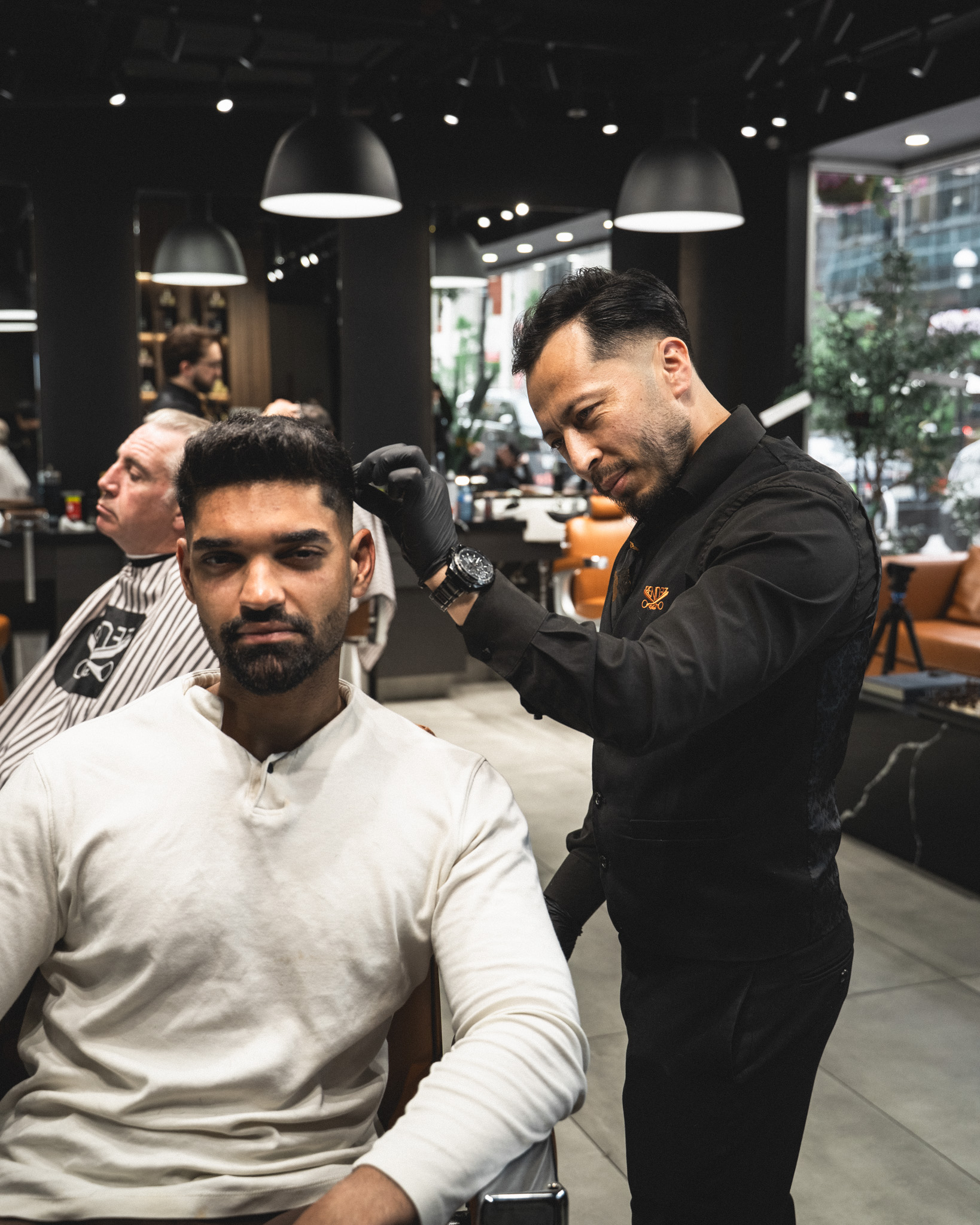
The barbers who ask are the ones who understand that a haircut isn't just a technical execution — it's a conversation between two people about a very personal outcome. The check-in keeps that conversation going past the first two minutes.
At Rendezvous, every cut is a dialogue. The goal isn't to impress you with speed or silence. It's to get the cut right.
Book your appointment at Rendezvous Barbers in Toronto and experience what it looks like when a barber actually pays attention.

%20(1)%20(1).jpg)