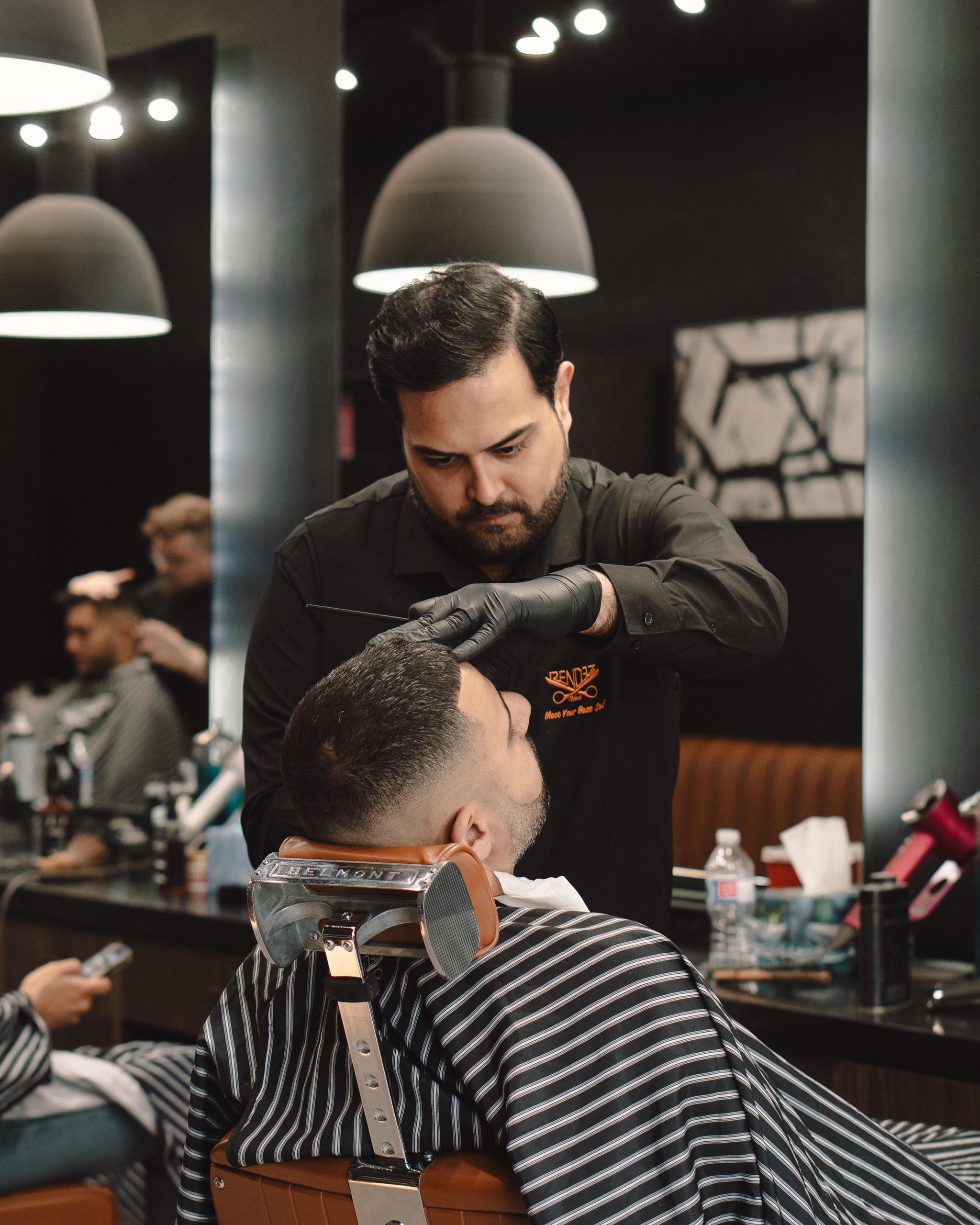
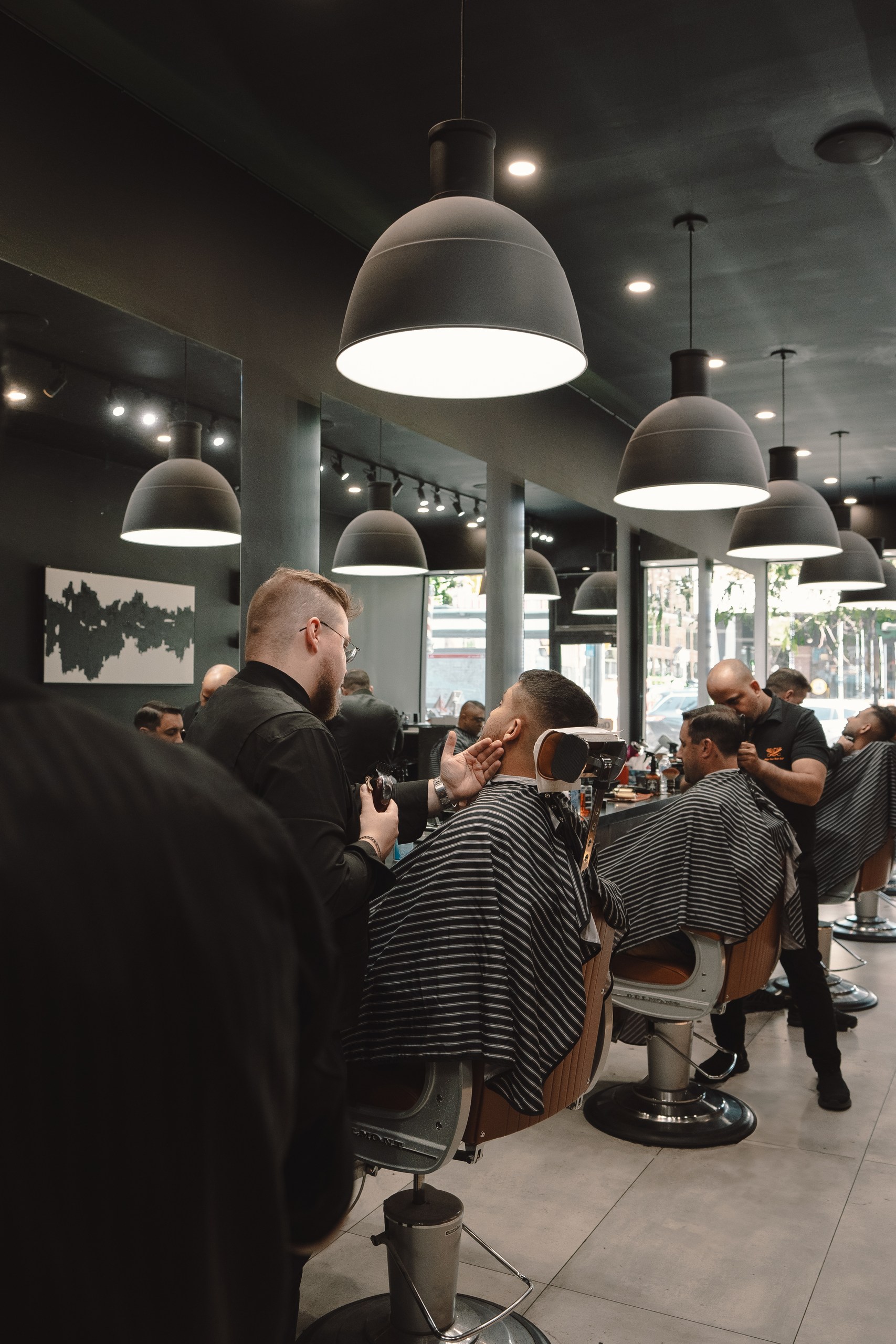
Edgar haircut requests start the same way. Someone sits down, pulls up a photo on their phone, and says “I want this.” The photo is a good start, but the cut in it can mean a few different things, and the details are what decide whether it works.
At Rendezvous Barbers, we cut it regularly, and the same questions come up every time. What exactly is it, what do I say, and will it work on my hair? Here’s how we explain it in the chair.
What the Edgar haircut actually is
It has three parts. The sides are faded, usually a high or mid fade or a skin fade, with a crisp line-up along the hairline. The fringe is short and cut blunt, straight across the forehead in one flat line. The top is kept simple and combed forward so it lies flat instead of looking textured or messy.
The look comes from contrast. You get tight, faded sides against one hard, straight line across the front. Nothing about it is meant to look casual or tousled.
The cut is closely associated with Latino communities, and it spread widely through social media. Because the label means slightly different things to different people, describe what you want in detail and bring photos, which is what we’d suggest for any cut.
How it differs from cuts it gets mistaken for
A few cuts look alike in photos, and mixing them up is how people leave with the wrong one.
The Caesar cut is short, even-length hair with a straight fringe, usually without a dramatic fade on the sides.
The French crop has a short fringe and often a fade, but the top is textured and cut with movement instead of lying flat.
The bowl cut is a rounded shape cut at the same length all the way around, with no fade at all.
The Edgar sits between them: the fade of a modern cut with the blunt, flat fringe of a Caesar. If your reference photo shows a textured top, you’re probably looking at a French crop, and you should say so.
Three versions worth knowing
The classic is a high skin fade, a short blunt fringe above the brows, and a sharp line-up. It’s the most dramatic and the one most people picture.
The taper version swaps the skin fade for a mid or low taper, with the same straight fringe. It’s softer, easier to wear to work, and grows out more gracefully.
The longer fringe sits right at the brows or just over them. It’s less severe and more forgiving if your hair is fine or your forehead is on the shorter side.
What to say to your barber
Three decisions shape the result, so know your answer to each before you sit down.
The fade. High or mid, skin or taper? A skin fade is more dramatic and shows growth faster. A taper is softer and easier to live with. If you’re unsure, our skin fade vs. taper post explains the difference.
The fringe length. It usually sits around the eyebrows or just above. Too short and it looks like a mistake that takes weeks to grow back. Too long and it falls into your eyes and loses its shape. Point to where you want it relative to your brows.
The line-up. The hairline gets a crisp shape-up. Decide whether you want it straight and sharp or slightly softer.
Bring photos, ideally from the front and the side, and say two things plainly: “cut blunt, straight across,” and “no texturizing on top.” Many barbers add texture by default, and that breaks this cut. The flat, clean line is the whole point.
Will it suit your hair?
Hair type decides more than anything else.
Thick, straight hair is the easiest. It lies flat and holds the line. Wavy hair can work, but the fringe needs more help to stay down. Very curly hair tends to spring up, so a flat fringe takes extra work, and you should ask your barber whether it’s realistic for you.
Fine hair is the other risk. A blunt fringe on thin hair can look see-through, and the straight line loses its impact. And if you have a cowlick at the front hairline, it will fight a flat fringe every morning. We cover that in our cowlick post.
Face and head shape matter too. A flat fringe visually shortens the forehead, so it suits a taller one. On a very round face, fade height and fringe length need extra care so the cut doesn’t add width. A high skin fade also shows your skull shape, which we cover in our post on head shape and haircuts.
Don’t forget the back and neckline
Everyone looks at the front, but the back matters just as much. The neckline can be blocked (squared off), rounded, or tapered naturally. A blocked neckline looks sharp next to a blunt fringe, but it grows out untidily and shows every stray hair. A tapered neckline is softer and more forgiving. Pick one before the cut starts. If you’re prone to irritation on the nape, say so, because a very close neckline can cause bumps.
Styling it
The good news is that it’s simple.
Comb the fringe forward while your hair is damp, then let it dry that way. A small amount of matte paste or a light spray is enough. Avoid heavy pomade, which adds shine and makes the fringe separate into pieces. If you blow-dry, keep the heat low and brush the hair forward.
Toronto winters add a wrinkle. A toque flattens everything, and dry indoor air adds static that makes a straight fringe lift and fly away. Take your hat off slowly, smooth your hair down with damp hands, and add a touch of leave-in if static is a problem. Our hat hair post has more on this.
Pairing it with a beard
The cut works with a beard, but the two need to match. A sharp, well-shaped beard balances the severity of the fringe, while a patchy or overgrown one makes the whole look feel unbalanced. If you’re clean-shaven, the cut puts more attention on your face, so be comfortable with that. Our beard and haircut balance post covers how the two fit together.
Keeping it sharp
This cut needs regular upkeep. The fade grows out in two to three weeks, and the sharp line fades with it. The fringe needs a trim every three to four weeks, because a straight edge looks uneven as soon as it grows.
Don’t trim the fringe yourself between visits. It’s the hardest part to fix once it’s uneven, and a small mistake shows from across the room.
If you decide to grow it out, expect a few awkward weeks. A fringe past your brows with the fade filling in doesn’t look like either cut. The easiest route is a move to a textured crop or a taper, reshaped in stages. Our textured crop vs. buzz cut post covers where to go from there.
Mistakes that ruin it
Cutting the fringe too short. It’s the one mistake you can’t undo, and it takes weeks to recover.
Letting the top get textured. Point cutting or thinning shears turn a clean line into a ragged one.
Going too high on the fade for your head shape. A very high skin fade exposes bumps and flat spots. Ask your barber to check before they go all the way up.
Skipping the line-up. A blunt fringe against a soft, fuzzy hairline looks unfinished. The sharp edges are part of the cut.
Copying a photo without considering your hair. A cut that looks perfect on thick, straight hair can look thin and flat on yours.
Questions we hear most
Can I have it with longer hair on top? Not really. The cut depends on a short, flat fringe. If you want length, you’re looking at a different cut, such as a textured crop or a flow cut.
How long until it grows out? Within three weeks the fringe starts to lose its edge and the fade softens.
Can I do it myself? We wouldn’t. The fringe line is easy to get wrong, and clippers on a fade line don’t forgive mistakes.
How long should I book? Allow extra time. The fade, the fringe and the line-up all need precision, and rushing any of them shows.
Is it right for you?
It’s a bold cut. In a creative or casual workplace it’s easy to wear. In a more conservative one, a high skin fade with a short blunt fringe may stand out more than you want.
There’s a softer version. A mid taper with a slightly longer fringe keeps the shape and looks less severe. Tell your barber where you work and how much attention you want, and they’ll adjust the details.
Make sure you want the maintenance, too. If a cut every two to three weeks sounds like too much, this isn’t the one.
The Bottom Line
The Edgar cut is a simple idea that depends on execution: a clean fade, a straight fringe, and a hairline that’s shaped properly. Know what you’re asking for, show a photo, and be clear about the fringe.
Ready to try it? Book your appointment today at one of our five locations in Toronto. Bring your reference photos and we’ll tell you honestly how it will look on your