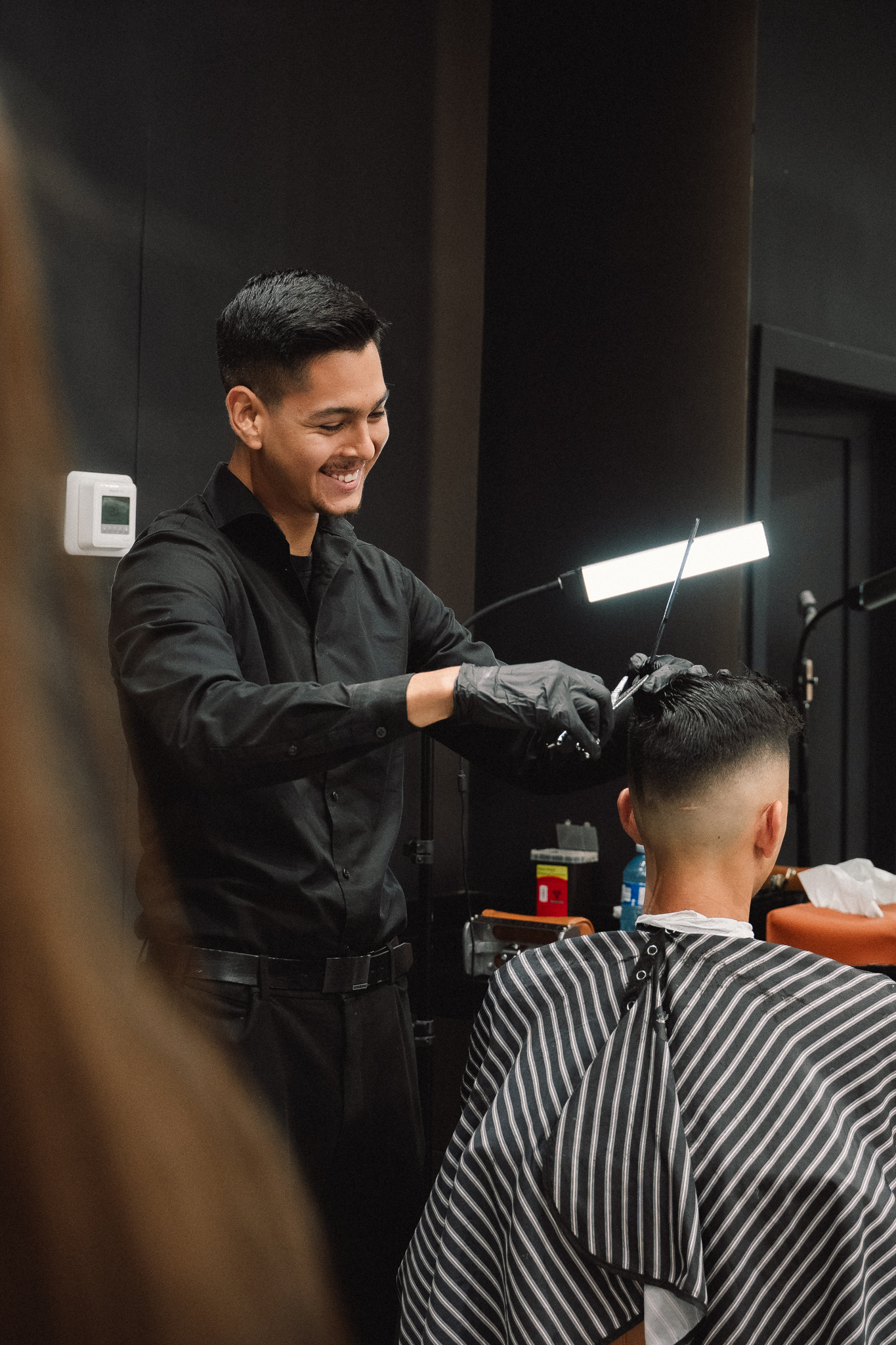
There's a predictable week every fall when guys start coming in scratching their heads. Nothing about their hair routine has changed. What changed is the air.
At Rendezvous Barbers, we see this reliably from mid-October onward. It's not dandruff and it's not a sign you're doing something wrong. It's a seasonal switch, and understanding it makes the next few months much easier.
What Changes in October
Summer in Toronto is humid, and that moisture helps your scalp. Then the furnace turns on. Heating dries indoor air considerably, and the air outside gets colder and drier too. Your scalp is skin, and skin loses moisture quickly when the air around it has little to give.
The result is a tight, slightly itchy feeling, sometimes with fine, dry flakes. These tend to be small and white, nothing like the oily, larger flakes of true dandruff, which we covered in our dandruff post.
Your Shower Makes It Worse
The usual culprit is the hot shower. When it's cold out, long, steaming showers feel great, and they also strip natural oils from your scalp faster than lukewarm water does. Pair that with shampooing every day and you're removing the oil your scalp needs to stay comfortable.
Turn the temperature down a little, especially when you rinse your hair. You don't need cold water, just something less hot. And if you wash daily, our shampoo schedule post covers whether you really need to.
Conditioner matters here as well. Many guys skip it because their hair is short, but on a dry day it helps keep the lengths and scalp area comfortable.
Hat Season Adds Friction
Once toques come out, the scalp deals with friction, trapped sweat, and a closed environment all day. If you're wearing a hat on the commute, then sitting in a heated office, you're cycling between wet, warm, and dry air.
Two simple habits help:
- Wash your hats. Last winter's toque has been in a drawer collecting oils and residue. Wash it before it goes back on your head.
- Take it off indoors. Giving your scalp a chance to breathe makes a real difference.
If your hat flattens your hair, we've covered that separately in our hat hair post.
What Actually Helps
Run a humidifier if you can, especially in the bedroom. Even a small increase in indoor humidity makes a noticeable difference to dry skin.
Wash less aggressively. Use a gentle shampoo, focus it on the scalp, and don't scrub with your nails.
Rinse thoroughly. Leftover product dries on the scalp and adds to itchiness.
Lighten up on styling product. Heavy products and dry skin don't mix, and residue makes irritation worse.
Try a scalp treatment. A professional scalp treatment clears out buildup and includes a massage that leaves your scalp feeling better. To be honest about it, it isn't a growth treatment, and it won't solve a medical problem. But for the seasonal dry, tight feeling, it's a good reset, and we'll tell you at the chair whether you need one.
When It's Not Just Dry Air
A seasonal itch should ease with a few adjustments. See a doctor or dermatologist if you notice:
- Redness, soreness, or patches that don't improve
- Heavy, persistent flaking that keeps getting worse
- Hair loss in the affected area
- Anything that doesn't respond to a couple of weeks of gentler habits
We can tell you what we're seeing, but we're barbers, not doctors, and those signs are worth a medical opinion.
Plan Ahead for the Whole Season
The good news is that the fix is mostly habit. Swapping to lukewarm showers, adding conditioner, and washing your hats takes minutes, and doing it in October prevents the January version of the problem, when dry air and cold are at their worst.
Toronto winters are long, so setting up your routine now means you're not trying to fix a scalp that's already irritated halfway through.
The Bottom Line
An itchy scalp in October is one of the most predictable parts of the Toronto fall, and one of the easiest to manage once you know why it happens. Adjust your routine now and the next few months get a lot more comfortable.
If your scalp is already complaining, book your appointment today at one of our five locations in Toronto. We'll look at what's going on, tell you what's worth doing, and let you know honestly if a scalp treatment makes sense or if you can skip it.

%20(1)%20(1).jpg)





.jpg)
